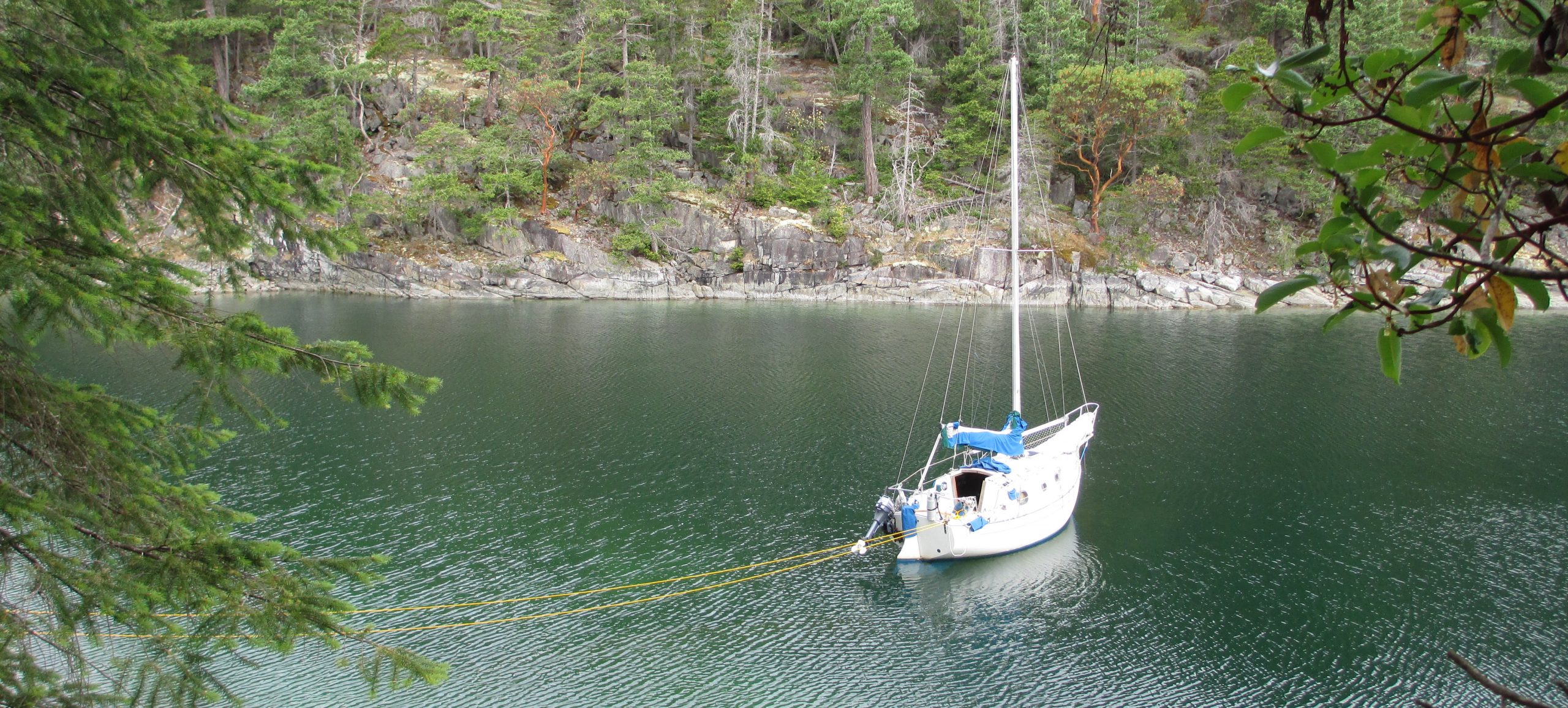
Sometimes with boats, you have to think outside of the box. The tool box, that is. The latest installment of The Resourceful Sailor does just that in an effort to remove the external chainplates from Sampaguita. The full article was published on February 18, 2022 on ‘Lectronic Latitude, the online version of Latitude 38. A special thanks to Monica and the crew for keeping the column alive.
Click below for the full article.

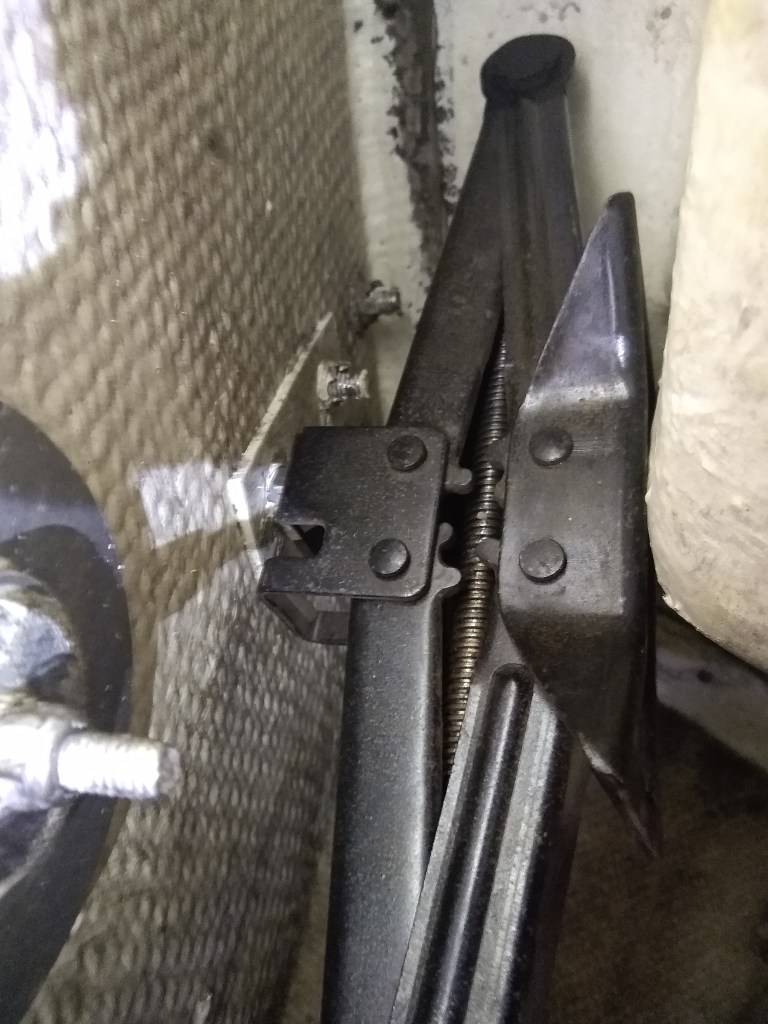
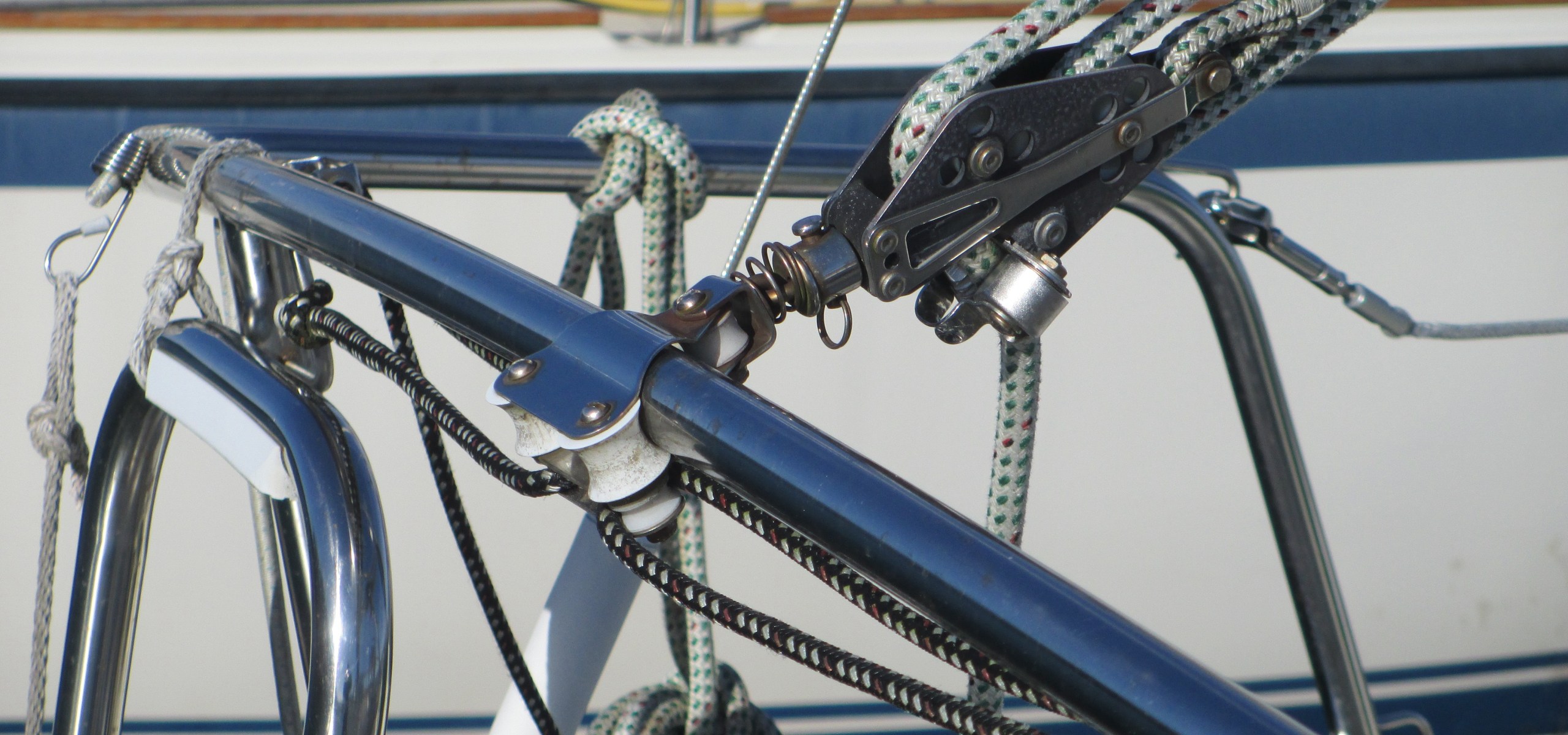
What do you do when your aging sailboat hardware needs rebuilding or replacing? The Resourceful Sailor takes a look at some of the possibilities using the Schaefer round bar traveler as an example in, A Traveler’s Story. A special thanks to Latitude 38 and ‘Lectronic Latitude for publishing it on January 24, 2022. It takes a look at rebuilding an oldie, but goodie found on Pacific Seacraft Flicka 20s. Thank you for taking the time to check it out and thank you to Monica and crew down in the SF Bay area for their support.
For the full article, follow the link below to ‘Lectronic Latitude.
https://www.latitude38.com/lectronic/the-resourceful-sailor-a-travelers-story/

And there is also a video:
Looking for a little more light in the cabin? How about a better view from down below? There’s a new Resourceful Sailor installment, Transparent Drop Boards, which highlights how I made acrylic drop boards for Sampaguita, a 1985 Pacific Seacraft Flicka 20. The full article was published in Latitude 38‘s online magazine, ‘Lectronic Latitude, on January 5, 2022. Thank you for checking it out, and special thanks to Monica and the crew, and Happy New Year to all.
For the full article, follow the link below to ‘Lectronic Latitude:
https://www.latitude38.com/lectronic/2022/01/05/#resourceful-sailor-building-transparent-drop-boards
A new Resourceful Sailor Series installment is here! After a rig refit, the mast of Sampaguita, a Pacific Seacraft Flicka 20, needed to go back up. Could it be done at the dock? Could it be done single-handed? You betcha. Latitude 38‘s online magazine, ‘Lectronic Latitude, has published “Raising the Mast of a Small Sailboat with the Resourceful Sailor – The Solo Version” on December 17, 2021. This article and video go hand in hand with this past June’s “Lowering the Mast of a Small Sailboat.”
It explores the prep involved in raising a small sailboat’s mast using simple machines and physics. It compares some of the differences and similarities between raising and lowering a mast and includes a first-person video of the action.
A special thank you to Monica and the crew at ‘Lectronic Latitude for their support and patience.
For the full article, follow the link below to ‘Lectronic Latitude:
https://www.latitude38.com/lectronic/2021/12/17/#raising-the-mast-small-boat-resourceful-sailor

For the video:

A version of this article was first published on the July/Aug 2019 issue of Small Craft Advisor Magazine.
This is a popular post. It must have some value. Please consider a donation to help keep it available for reference and future consumption. Thank you.
PayPal or Zelle: wheelersf@hotmail.com
“How do you run a stern-tie setup when you have limited working and storage space on board?” This is one of the questions I asked myself in fitting out my Flicka 20, Sampaguita, for Pacific Northwest expeditions. First, I’ll address what a stern-tie is, why you might need one, and the equipment involved. Second, I’ll review the specific issues I faced as a small boat owner and how I personally solved those challenges. Third, I’ll discuss how this solution and its variables works for Sampaguita in real-world practice.
A stern-tie is a line leading from the stern of a boat to an object on shore. This could be a tree, a rock, or piling. In Washington State Parks and British Columbia Provincial Parks, you will often find rings, chains or posts installed for this purpose. When used in conjunction with a bow anchor, the line holds a boat in a particular place or aids in the security of the bow anchor.
In the Pacific Northwest, there are many beautiful coves and inlets to attract you to anchor for the night. Sometimes you need a place to wait for the weather or a tidal rapid to settle. You might have run out of navigable light, or are too exhausted to sail on. Once in the anchorage, the seabed may have a steep sloping bottom or be of poor holding ground for the anchor. Sometimes there is limited room because of rocks or other boats in your swing circle and in some anchorages, it is just considered polite to reduce your swinging radius to leave room for later arrivals. So, you see, a stern-tie setup can be necessary for safety, security, and etiquette.
I will limit the equipment focus to only the stern-tie setup including the line, a reel, and chafe protection. The materials used and the working and storage space will be considered. Not included are the bow anchor and the tender. While both are necessary for stern tying, they will serve you in other situations and are considered prerequisite acquisitions. Each presents problem-solving challenges which could be articles of their own.
In the search for my own stern-tie solution, my first step was to purchase 300 feet of 3/8”, 3-strand, yellow, polypropylene rope. This would give me an adequate length to lead to shore and then back to the boat. An advantage of going in a full circle like this is that polypropylene line hitches on the cleat better than it ties into knots. However, the biggest reason is when departing there is no need to leave the boat to untie the line. Just release the line from the cleat and reel it in.
I chose 3/8” diameter line because this size would provide adequate strength for my anticipated loads and 3-strand because of its lower cost. The choice of yellow, and polypropylene, was due to safety. The yellow would provide high visibility so other boaters would see it. Polypropylene, because it floats, aids visibility and offers the best property to avoid accidentally wrapping the line around my outboard’s propeller.
The crux to the working and storage space consideration is the reel. On my Flicka, the rudder is transom hung and occupies the mid-section of the transom. The outboard engine is mounted to port of the rudder. To starboard, hung on the stern rail, is the propane tank. The stern light is also located here. On a Flicka, the mainsheet traveler is the stern rail, and Sampaguita has dual backstays. Furthermore, I stow my fenders on the starboard rail and my stern anchor and reserve fuel on the port side. With all this other necessary gear, there is not much room for a permanent, traditional style line reel.
At first, I tried to do without a reel, coiling up the line and storing it in the cockpit locker. This addressed the working and storage space issue, but 300 feet of 3-strand polypropylene can be unruly and tangle easily. This caused problems with deployment and retrieval and took too much time. Research uncovered options like garden hose reels (too bulky) and beautifully crafted stainless steel reels (too expensive AND too bulky). Neither offered the simple, economical and flexible solution that suited my single-handing style and my small boat.
Then, I had an idea. I went to the marine store and inquired if they had any empty rope spools. They had many; I was offered a choice and opted for a weather resistant plastic one. I searched my stash of nuts, bolts, and washers, finding a combination to build a handle to wind in the line. I drilled a 3/8” hole through the outer edge of what would be the top side of my reel. I fed a 3/8” X 6” fully threaded bolt up through the hole, added large fender washers to both sides and finally a nut to tighten it down. What I had on hand was mild steel, and after 4 years it is showing some rust. If you want greater style, cost and corrosion resistance, go for all stainless steel. As a final touch, I sleeved the bolt with a piece of 3/8” I.D. plastic hose to protect my hands from the threads.
Next, I found a piece of lumber from my marina’s refuse pile that could be a post for the spool to spin on. I whittled down one end to fit tightly into Sampaguita’s sheet winch ratchet socket. I cut the piece to a length that, once installed in the ratchet socket and the spool added, it would extend only an inch or so above the reel. I made two, in case one broke. Finally, I tied one end of the line to the spool and wound up its entire length.
Chafe protection was added to the working end of the stern line. This was a spiral cut segment of old water hose, followed by a small float and a stopper knot. The line needs protection from chafe regardless of what its tied to. If a tree is used and unprotected, the line will cut through the bark. This is a great reason to use chains, rings, and posts if they are available. As the line is reeled in, the chafe guard remains in place while the rope runs through it. The small float then “gathers” the guard at the end, bringing everything back to the boat.
When the stern-tie set up is not in use, it is stored under the v-berth. This location is the best out-of-the-way space on my Flicka roomy enough to accommodate the spool. Additionally, it keeps the polypropylene line, which is highly susceptible to UV degradation, hidden from the sun.
Is this a simple, inexpensive and flexible solution that works? I found it to be. It does require forethought when approaching an anchorage and a stern-tie is anticipated. With storage areas on my small boat, I need to move something to get to something. Collecting the setup from the v-berth is no exception. If the kayak is not in tow, that will need to be inflated. As I choose an anchor spot, I also survey the shore for an appropriate object for a stern-tie. Once the bow anchor is set, the post goes on the winch, the spool is added, and I paddle the line ashore and back. I hitch the line where it leaves and returns to the boat, and the reel is not under load.
When departing, the line is released and wound in. The location is easy to access, and the post doesn’t inhibit rotation. After it is reeled in, I move on to weighing the bow anchor. Once underway, I return the stern-tie set up to storage. When I have access to a freshwater hose, I rinse the line and reel to remove any salt and grime. A good rain will work for this too.
I have tried some variations of implementation. One, inflating the kayak in route to the anchorage. This was awkward on Sampaguita’s small deck, but possible in mild weather. For another, I temporarily dropped a stern anchor over the side after the bow anchor was set. This kept the boat in position while I inflated the kayak. A stern anchor can also be useful when taking the line ashore to keep the boat from swinging to the wind and current. Speaking of these, consider them as well as potential future shifts. Strong cross winds can apply heavy loads on lines and hardware, much more than would occur if swinging to just a bow anchor. Likewise for currents, which in tidal areas may reverse or swirl. While winding in my line, I have gotten the float caught in the rocks. This necessitated kayaking ashore to unhook it, defeating the point of the full circle. It is also nearly impossible to reset the bow anchor once stern tied. Releasing the line and starting over is likely the best option. You may note, these variables can happen regardless of the answer for the stern-tie setup.
Each sailor, for each boat, will have their own variation on the stern-tie setup that best accommodates them. A smaller boat may present more challenges concerning working and storage space and require creative and unorthodox solutions. I offered a solution that has worked for me and my Flicka. If it works for another boat, in part or in whole, or inspires a different creative solution, I will be satisfied. For people who want to have big adventures on small boats and budgets, The Resourceful Sailor hopes to give ideas on how to make this happen. Remember, keep your solutions prudent, safe and have a blast.
More Video! Check out the new Resourceful Sailor Series piece, “Lowering The Mast Of A Small Boat,” published by Latitude 38’s online magazine, ‘Lectronic Latitude. In this one I highlight an advantage to going small by lowering the deck-stepped mast of Sampaguita, a Pacific Seacraft Flicka 20 at the dock. No cranes, no fees, and if you are really ambitious you can do it single-handed. It does take some set-up, research, and a grasp of physics.
A special thank you to Monica and the crew at ‘Lectronic Latitude for their support and patience.
For the full article, follow the link below to ‘Lectronic Latitude:
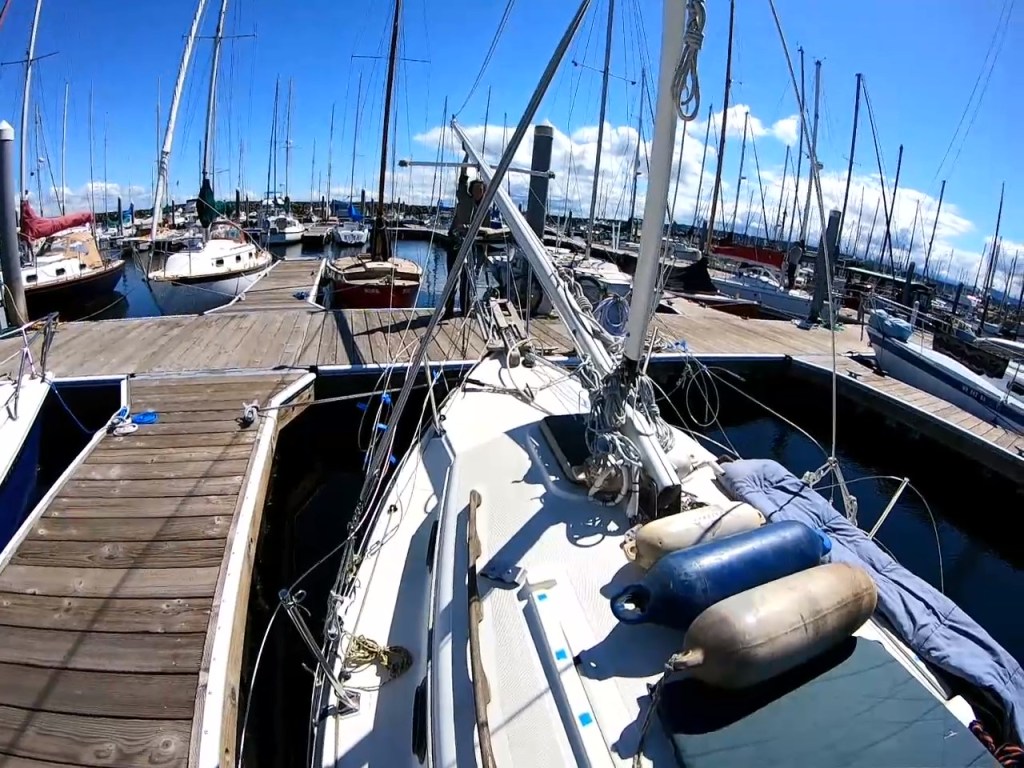
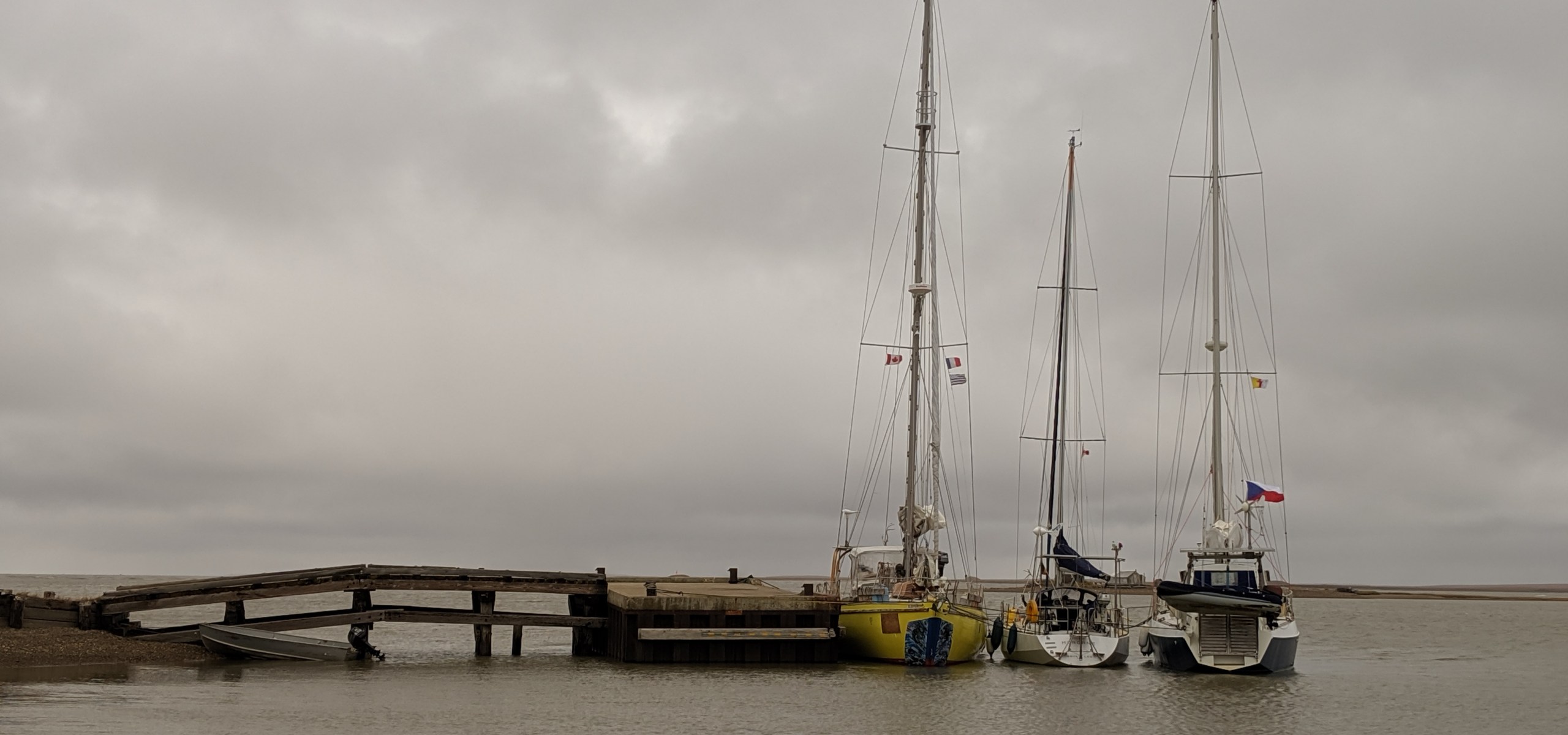
Photo: Eric Maffre
Breskell stopped in Tuk for provisions and repairs and left with a story of human connection. Tales From The Northwest Passage – Tuktoyakyuk – What’s In A Fish? has been published in the June issue of 48 North Magazine. It’s an honor to be published alongside Andy Cross and Karl Krueger, two inspiring local adventurer’s.
A special thank you to editor Joe Cline for his support, Eric Maffre for his photos, Olivier Huin for his ship, and Scott Wilson for his mentorshuip..
You can get a subscription to 48 North Magazine or pick up a free copy at your local chandlery or marina.


The Port Townsend Sailing Association, Blackbird Associates, and Steve Scharf have relaunched the 1979 CHB Trawler race committee boat, Committee. (Yes, that’s the name. Underworld sounding? Or a little like naming your dog, Dog?) Fresh from the Port Townsend Boatyard, simplified for purpose, and with a new electric motor, Committee is meant to augment the local sailing community and to oversee the local Thunderbird fleet and PHRF buoy and long-distance races.
Originally put on the hard for winter storage and routine maintenance in the fall of 2020, the refit turned into more of a rescue. As work commenced, it became clear that many of the systems of the 42-year old boat were at end-of-life. The leaky and smokey Ford Lehman diesel, which the house mechanic Dan Ginther had kept running, was ultimately going to need a rebuild or replacement. With parts difficult to source, the latter was the reality.
Steve, the owner of Committee, decided to pull the trigger on installing an electric motor. “At that point,” said Steve, “other diesel options were considered, but I convinced myself, despite a real mix of opinions concerning my sanity, to go electric.” It’s a progressive and new-age conscionable decision, though not yet widespread, whereas a diesel engine is time-honored but not necessarily forward-thinking. Full speed ahead, Steve enlisted Revision Marine to help design the new system.
In the meantime, there were other tired systems to remove that were unnecessary for a day-use committee boat. Out went the two-cabin heating system, the cooktop, and the hot water. Say bye, bye to refrigeration, radar (a tough call), and extra cushions. Get rid of the two large diesel tanks and the oversize freshwater tank. They removed the excess plumbing, renewed much of the remaining wiring, and rebuilt the steering. Other cosmetic and functional improvements are ongoing.
After a long winter of prep, the boat was ready for the motor to be installed. The new propulsion system Matt Mortensen of Revision Marine, a self-described tech geek, designed for Committee, hasa 108 volt, 40hp, Elco EP-40 electric inboard powered by a 25-kilowatt-hour battery consisting of five recycled Tesla modules. It will have an operating time of about three hours at 5.5 knots. Efficiency increases at slower speeds with 6.2 hours of run time at 4.5 knots. “They used about 15% of the battery capacity for Wednesday’s race,” stated Matt about Committee’s first outing for the T-bird racing.
The refit and repower of the committee boat demonstrate a commitment to supporting PTSA races and leading-edge technologies. The trawler’s structure is solid, providing a good viewing platform. Its operation will often be by volunteers, so it’s important to have a safe, simple, and reliable vessel that is easy to operate. As the days get longer and the Port Townsend race season heads into full swing, Committee is ready to play her star role out on the bay. As we see the reign of the combustible engine challenged in our modern world, the Port Townsend marine community is embracing the future.


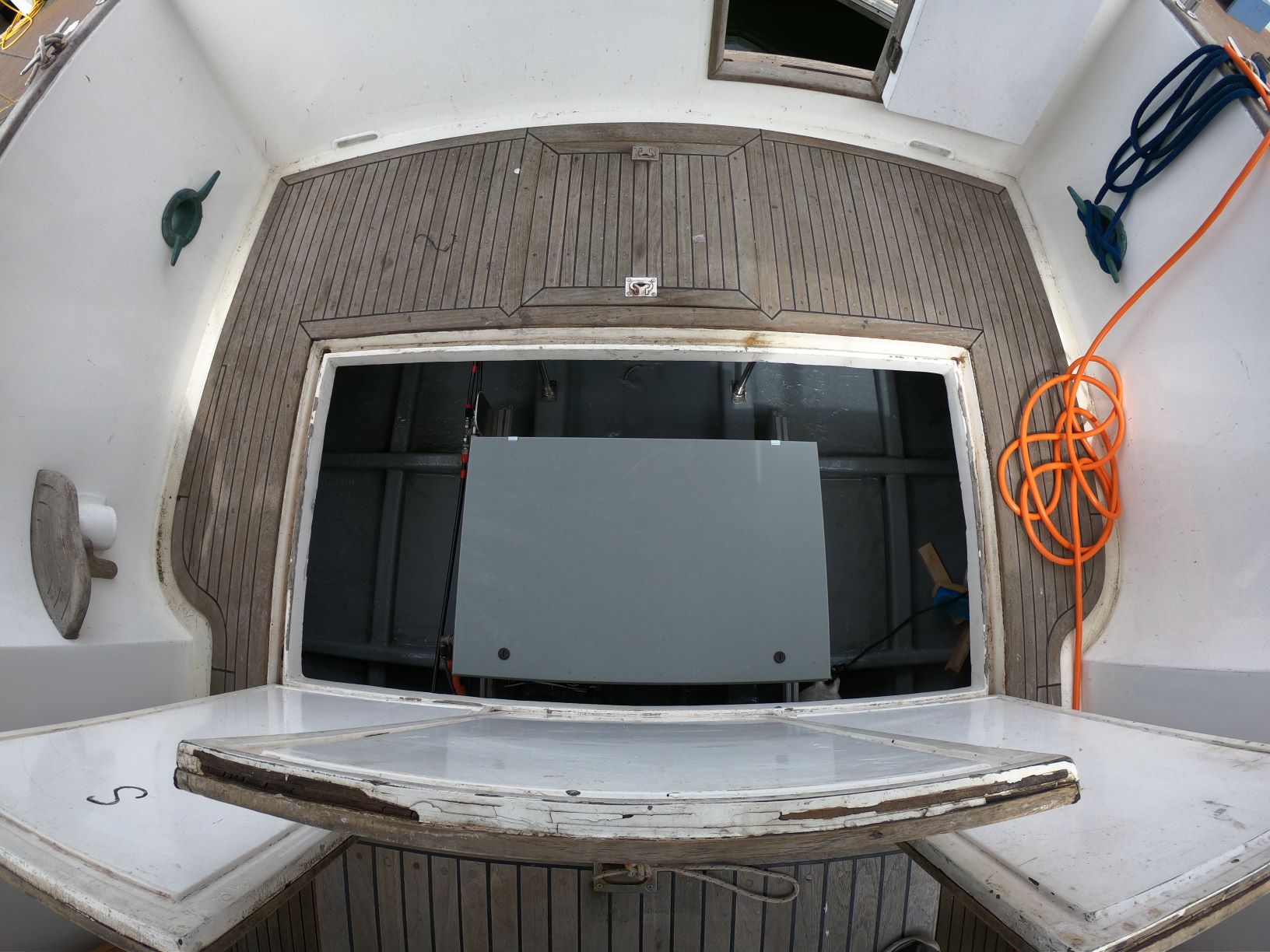
Out with the old plumbing and tankage. In with the new recycled Tesla battery.
Photo Credit: Steve Scharf, Steve Scharf, Joshua Wheeler
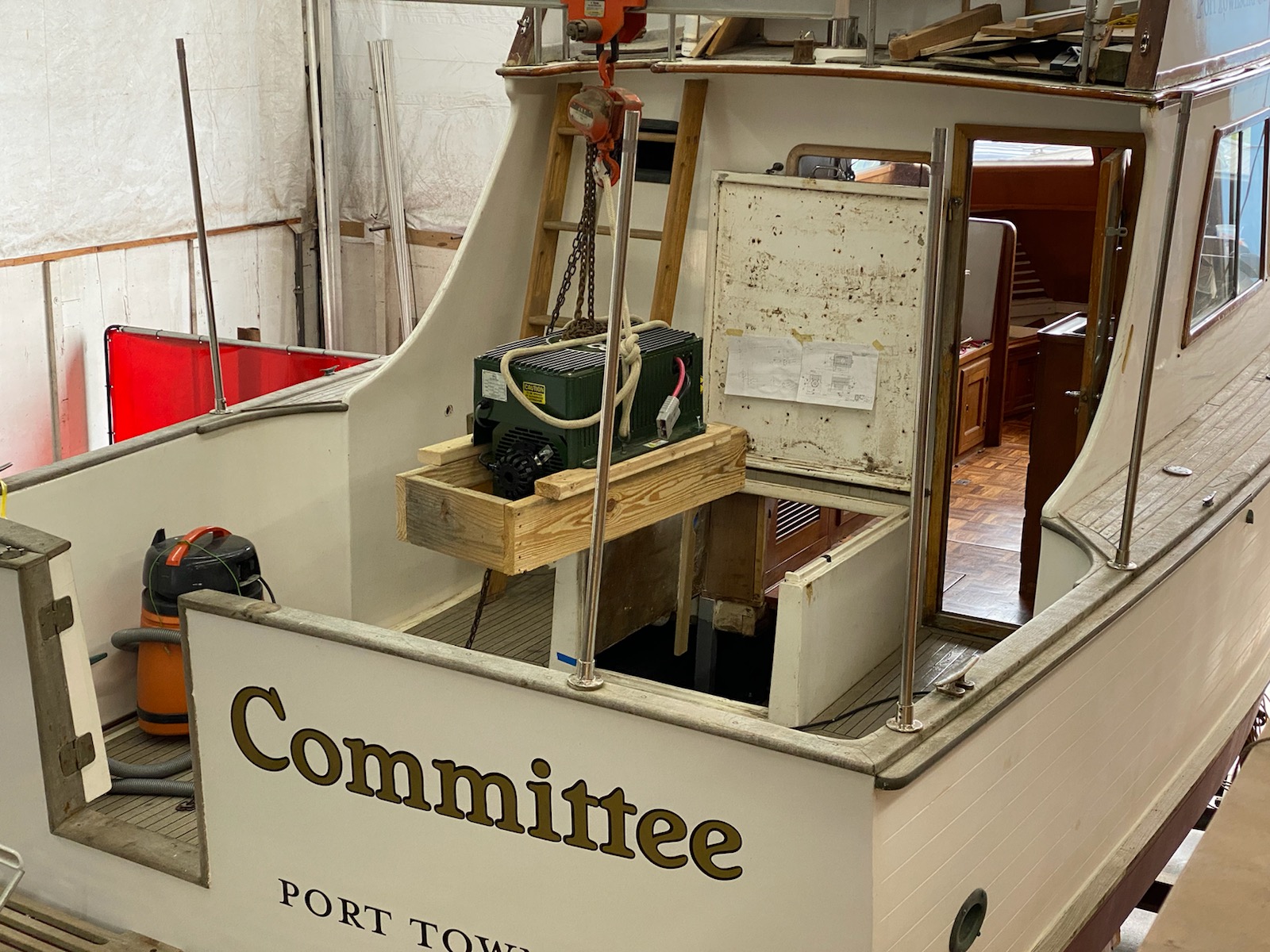
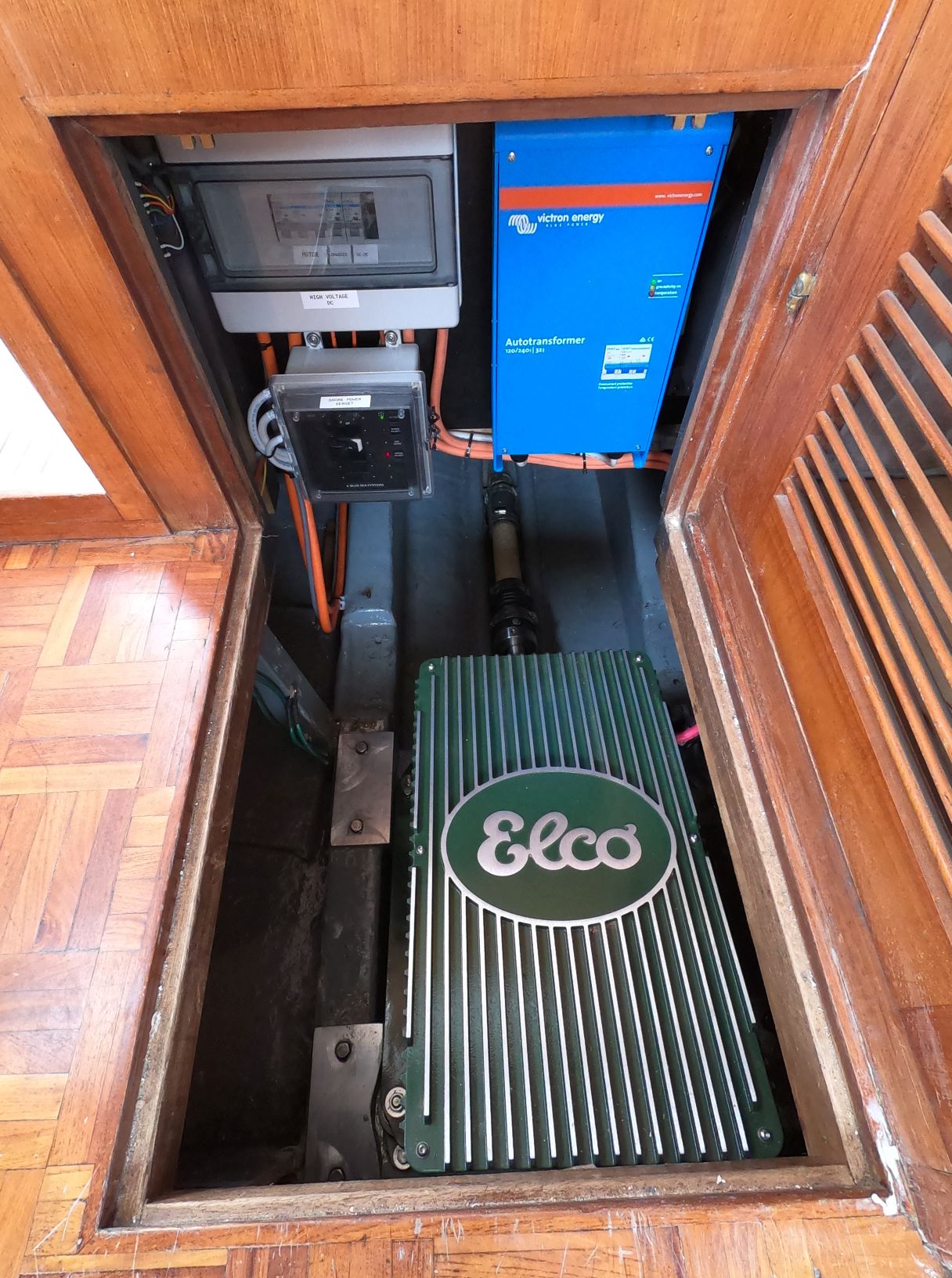

The Elco ready to installed. The Elco Installed. The Command Center
Photo Credit: Steve Scharf, Joshua Wheeler, Joshua Wheeler
What could be more salty? The latest installment by the Resourceful Sailor Series in Latitude 38′s online ‘Lectronic Latitude, centers around the addition of Breskell‘s crow’s nest for her transit of the Northwest Passage. Thank you to Monica and the crew for publishing “Shouldn’t Every Boat Have A Crow’s Nest?” on May, 12, 2021.
For the full article, follow the link below to ‘Lectronic Latitude:
https://www.latitude38.com/lectronic/shouldnt-every-boat-have-a-crows-nest/

According to Merriam-Webster’s online dictionary, the third entry defines ‘warp’ as to move (something, such as a ship) by hauling on a line attached to a fixed object.
Thanks to Monica and the crew at ‘Lectronic Latitude for publishing the latest installment of The Resourceful Sailor Series, Warping A Boat Around At The Dock, on April 14, 2021. It includes a video for the first time in RSS history!
For the full article and video, follow the link below to ‘Lectronic Latitude:
https://www.latitude38.com/lectronic/2021/04/14/#warping-a-boat-around-at-the-dock


 sailingwithjosh
 Sailing With Josh