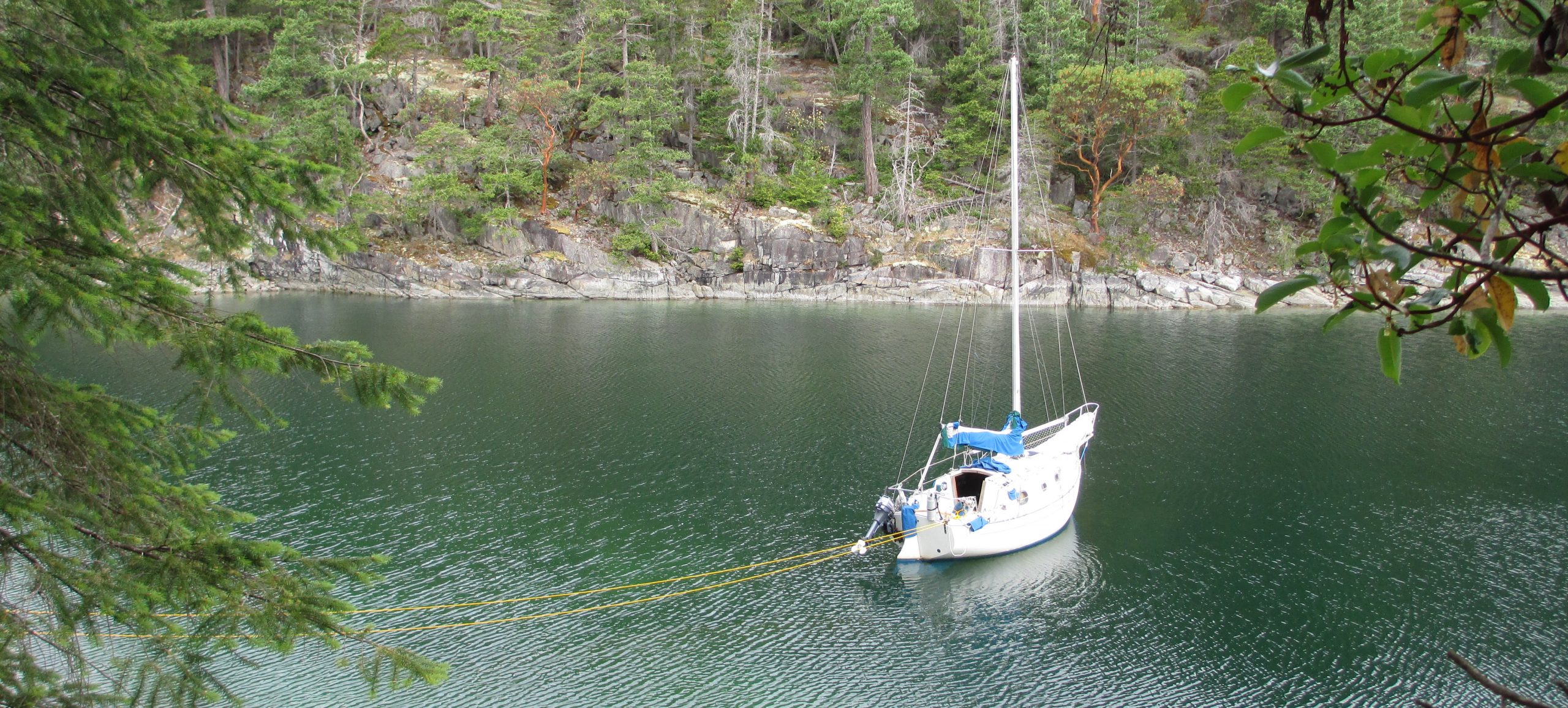

I can’t thank Monica and the crew at ‘Lectronic Latitude enough for their support. They have done it again. On March 12, 2021, they published my latest Resourceful Sailor Series piece, Outboard Thermostats – An Open and Closed Case.
“There is a simple test to determine if a thermostat is opening and closing properly. Place it into boiling water. It should open in the water and close when removed.”
Click the link below for the full article:
https://www.latitude38.com/lectronic/2021/03/12/#outboard-thermostats-open-closed-case
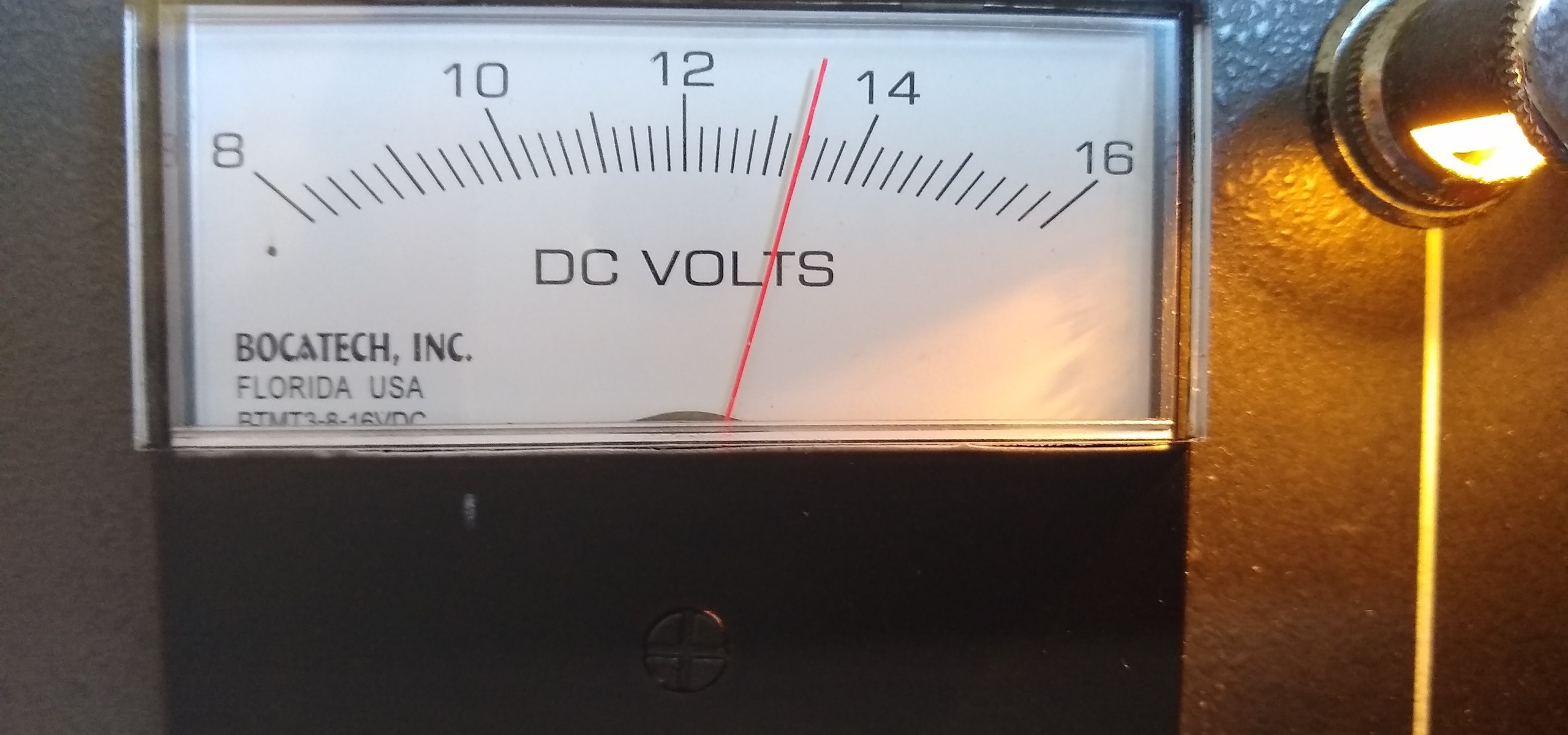
The battery-testing meter on Sampaguita, my Flicka 20, was not working properly. I was particularly missing it while swinging on the hook. In addition to slow-cooking stew on the solenoid-regulated stove, there were long, winter nights under the anchor light and short, stormy days with limited solar-charging opportunity. Monitoring the battery’s health was no longer flick-of-the-switch easy.
Thank you to Monica and the crew at ‘Lectronic Latitude and Latitude 38 for publishing the Resourceful Sailor Series installment, Replacing The Battery Meter on ‘Sampaguita‘, on February 15, 2021.
Here’s the link:
https://www.latitude38.com/lectronic/2021/02/15/#replacing-battery-meter-sampaguita


When you buy a used boat, you also buy a previous owner’s modifications. Sometimes these are desirable and sometimes less so. For example, the conversion of Sampaguita’s galley stove from alcohol fuel to propane was a win. But the push-pit mounted LPG tank blocked the visibility of the stern light. Correcting this seemed proper. This Resourceful Sailor Series article explains how I did that.
Thanks AGAIN to Monica and the crew at ‘Lectronic Latitude for publishing Keep The Stern Light in Sight on February 5th, 2021. Also, for their continued support in these trying times.
Click the link below for the article:
https://www.latitude38.com/lectronic/2021/02/05/#keep-the-stern-light-in-sight


A special thank you to 48 North Magazine for publishing my piece, Exploring Local: Kilisut Harbor, in their February 2021 issue. Kilisut Harbor was my go-to destination for 2020 for reasons I’ll let the essay explain.
You can get a subscription to 48 North Magazine or pick up a free copy at your local chandlery or marina.
There’s also a cool article about a new Maritime High School, and it looks like Sarah Scott bought a new boat too.


Sampaguita’s portlights had sprung a few leaks around the panes. It was very slight in only a couple but was worsening and spreading. The outer gaskets were deteriorating too, so it was time to roll up my sleeves.
I did just that, and the project was the subject of my most recent Resourceful Sailor Series article, Old Bronze Portlights: Sealing the Pane. A special thanks to Monica and the crew at Latitude 38‘s online version, ‘Lectronic Latitude, for publishing it on January 18th, 2021.
Click the link below for the article.
https://www.latitude38.com/lectronic/2021/01/18/#old-bronze-portlights-sealing-the-pane

‘Lectronic Latitude, the online counterpart to Latitude 38, published the lastest Resourceful Sailor Series installment, Don’t Chafe On Me, on December 14, 2020. This article demonstrates some easy and economical solutions that I came up with for preventing chafe on Sampaguita‘s anchor rode, bow sprit and platform, and standing rigging.
The intent of this Series is to demonstrate “outside the box” and affordable solutions to keep boaters on the water. I am not a shipwright or a tradesman. The goal is less about supplying a solution, and more about encouraging creative problem solving. Thanks for reading.
And thank you to Monica and The Crew for their support.
CLICK HERE for a link to the article.
Sampaguita, a Pacific Seacraft Flicka 20, and I went out for a sail one late November day in Port Townsend Bay, WA. I took this video with a head-mounted GoPro HERO 7 and have created clips centered around a few activities. There is no mood-inducing music added, just the sounds of sailing. Splashing water, roaring wind, flapping sails, winches and lines, my breathing, and the occasional talking to myself. And most of the bird-like sounds are actual birds. (If you must, think John Cage’s 4’33”)
These clips are not how-to lessons or the epitome of anything. They are “live” recordings, warts and all. No do-overs, no what-ifs. What struck me most when I reviewed these clips was how natural these maneuvers had become for me on this boat. It’s not that I am a spectacular or talented sailor. No, I am just well-practiced on Sampaguita. As I wrap up my eighth year with her, I have done these actions countless times, and my comfort with them seems evident, at least to me. It certainly helps that the boat is well-behaved, predictable, and easy to balance with the sails. This propensity to handle herself affords me the ability to handle lines and sails single-handed in a fairly low-stress, low-tech manner.
The knotwork is also second nature. Much of it occurs just off-camera. Figure eights on one end of the sheets, bowlines on the other. A reef knot here, a cleat hitch there. Wrap, lean, and pull.
It’s not all roses. The restricted deck space and rigging clearance require specific footwork, an inboard lean, and one hand for the mast. I have grown accustomed to this too. (The irony that Sampaguita has her lines led aft to the cockpit, but no roller furling headsail isn’t lost. Maybe I’ll make that change one day. Or not.)
Even when things don’t quite go right, like in Reef the Main (1’09”), the clew isn’t tight enough. It was an easy correction as if I had been through it before, many times. Or in Changing the Headsail (1’09”), the halyard doesn’t run clean. As soon as I felt resistance when pulling the sail down, I knew what was wrong and how to fix it. It wasn’t the first time.
The unexpected takeaway from these clips for me is the tremendous value in a boat I know. I will remember this the next time I wonder whether Sampaguita is the right boat to go voyaging in.
Reef the Main
Change the Headsail
Shake out the Reef

Dictionary.com defines bricolage [bree-kuh-lahzh] as “a construction made of whatever materials are at hand; something created from a variety of available things.” With financial means and healthy supply chains, this definition can have a broad interpretation. But when these break down or are nonexistent, creativity and ingenuity must prevail. Whether sailors or landlubbers, many people are ‘bricolagists,’ and they often have similar materials at hand.
A special thank you to Monica and the crew at ‘Lectronic Latitude, the online counterpart to Latitude 38, for publishing Tales from the Northwest Passage: Arctic ‘Bricolage’, Part 2 on October 21, 2020.
Click Here for a link to the article.

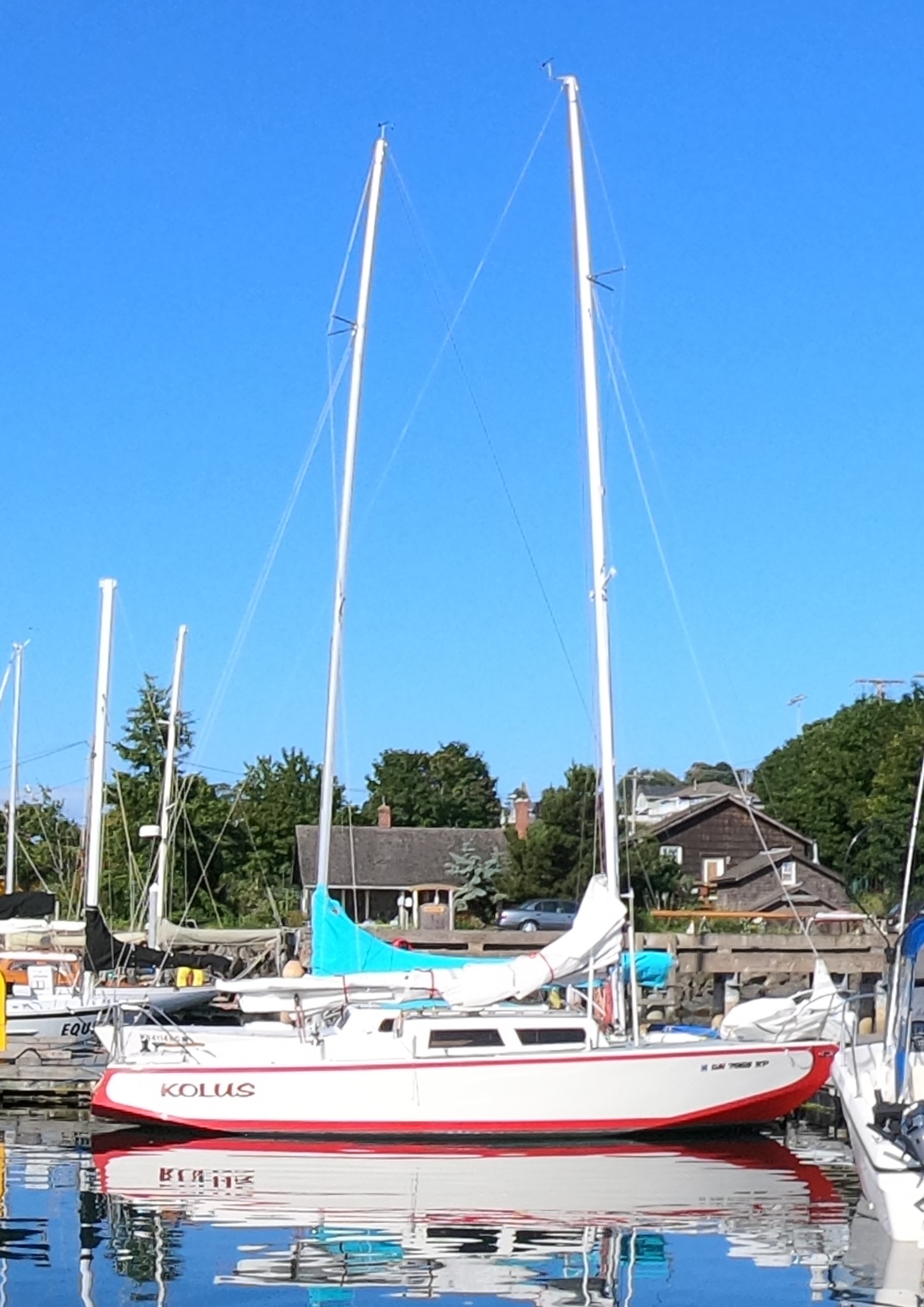
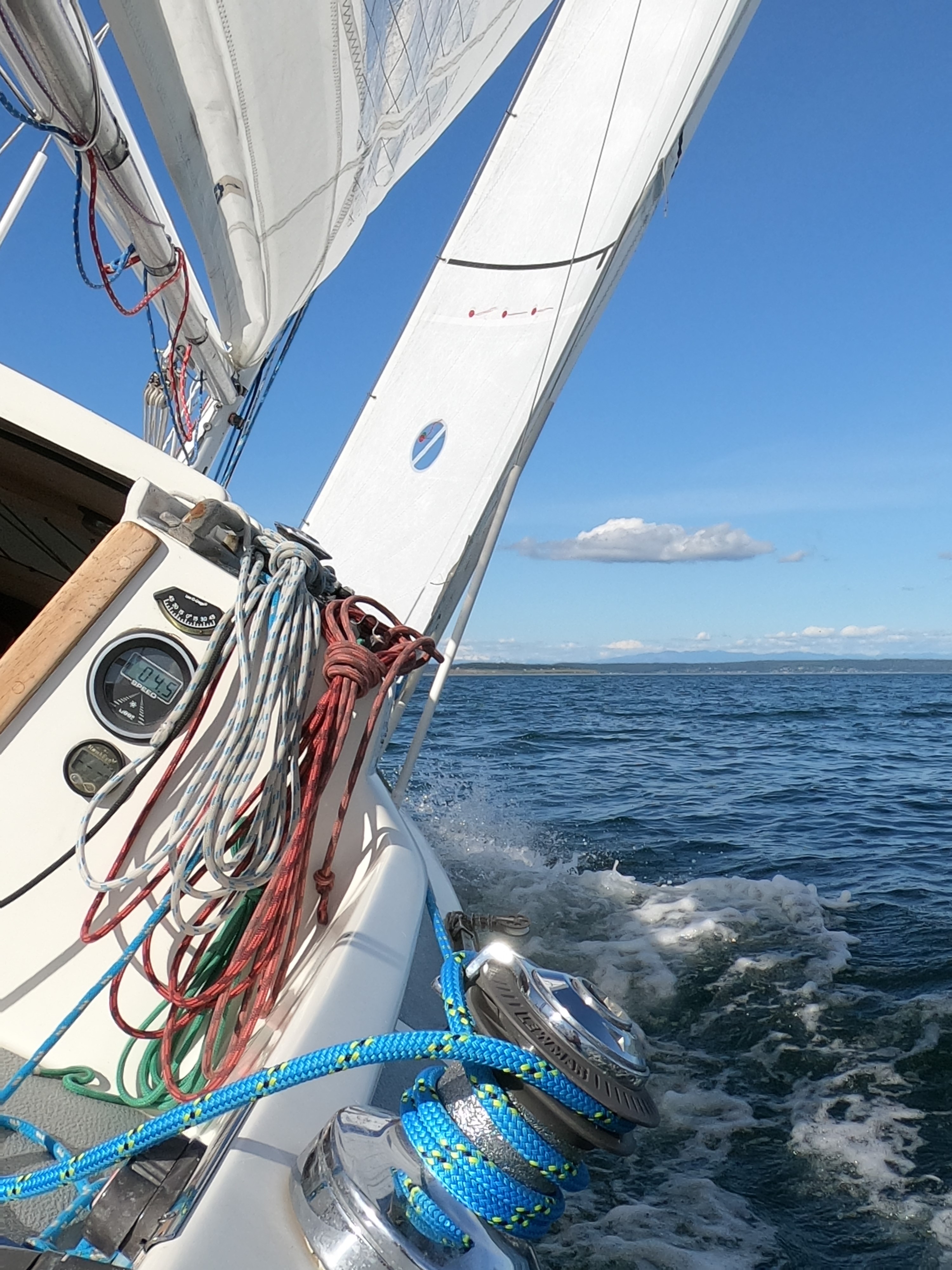
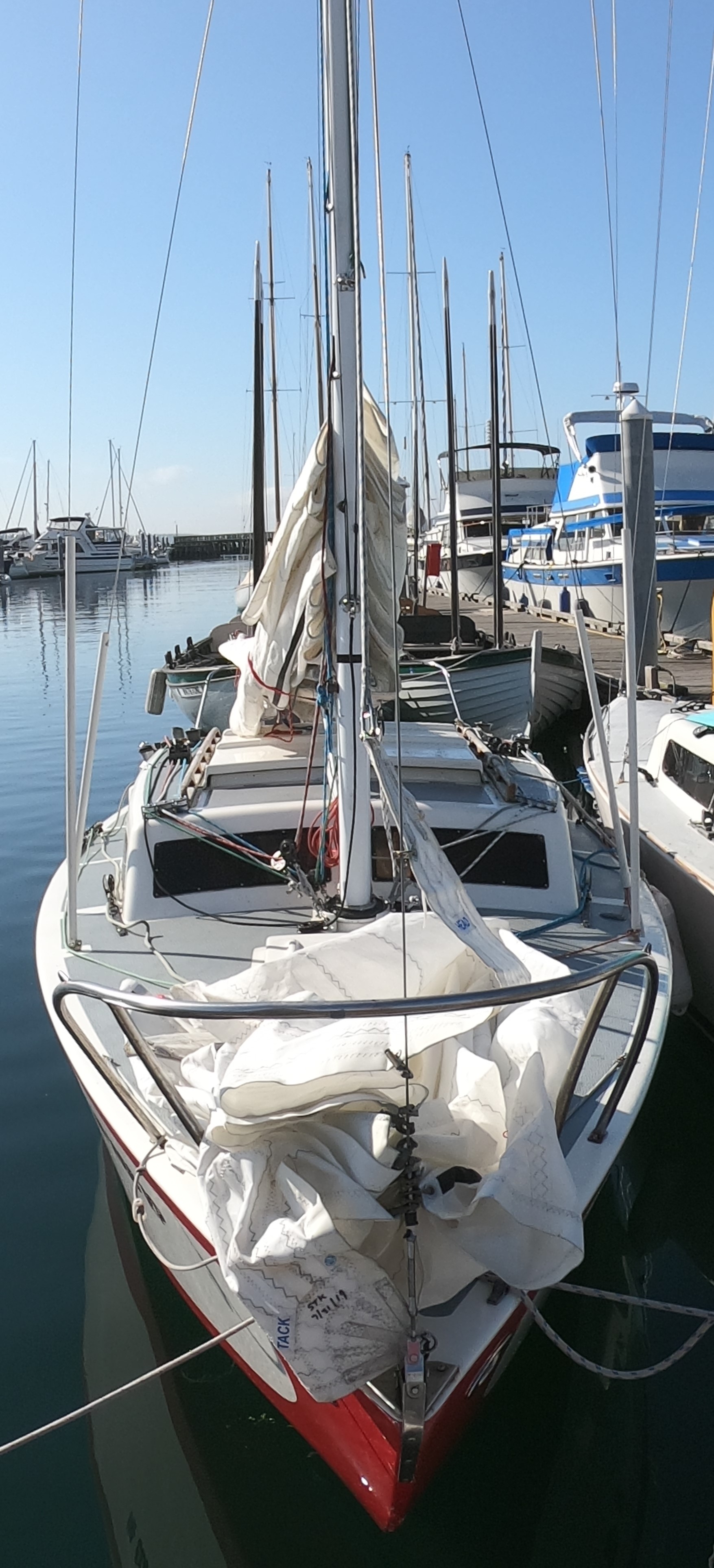
Little Thunderbird
I see your face.
Little Thunderbird
Ready to race.

 Your suit is creased
And your shoes are worn
Still you cut the waves
For which you were born.
*
Made fast to the dock
You patiently stand
Awaiting a skipper
To take your hand.

Your regular dance
The summer through
Wednesdays and Fridays
Sometimes Saturdays too.

Whatever tempo
The band will blow
You take a deep breath
And go on with the show.
*
Your suit is creased
And your shoes are worn
Still you cut the waves
For which you were born.
*
When the horns tune up
And the downbeat drops
You approach the line
Pull out all the stops.

To starboard you step
To port you swing
Around the buoy
Then back wing on wing.

When the band packs up
And the floor is clear
Another has won
But there is no tear.

The next time you’re asked
You’ll do it again
The feel of the music
To draw you in.
*
Your suit is creased
And your shoes are worn
Still you cut the waves
For which you were born.

Little Thunderbird
I see your face.
Little Thunderbird
Ready to race.


Dedicated to Blackbird Associates

I crabbed the inflatable kayak along the sand bar, looking for a channel. There wasn’t one. The current was against me, spilling over the wide breadth of the cut like a fan, the bottom visible a couple of feet below. I made for the eddies along the starboard shore, staying as close to the bank as possible. It was the inside of the dogleg and offered the most current relief. As I approached the turn, I was forced out into the center of the stream to stay in navigable water. “If I can make way here, I can make it all the way.”
I was paddling the new Oak Bay/ Kilisut Harbor tidal cut between Indian and Marrowstone Islands. This project was spearheaded by the Northern Olympic Salmon Coalition and coordinated with the Washington State Department of Transportation. It involved replacing a causeway with a 450-foot bridge and re-establishing a natural tidal channel between the two islands.

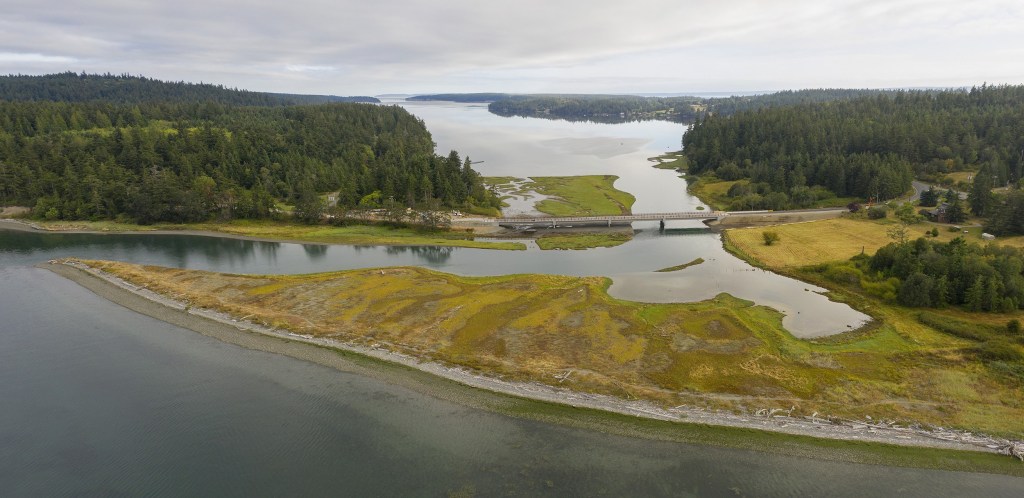
Image: John Gussman – https://nosc.org/restoration/kilisut-harbor-restoration-project/
My journey began the day before when I left Boat Haven on Sampaguita, my Pacific Seacraft Flicka 20, with the Aire inflatable kayak in tow. Strong Labor Day winds blew us quickly to Mystery Bay, where we anchored in the lee of the point, just off the Marine Park dock.

The weather blew itself out that evening and the next morning switched to a light southerly. It could be easily overcome in the kayak and would be a help on the return trip. However, a predicted wind shift to the North in the early afternoon could be a bit more disagreeable.
The first order of business was a paddle to the Nordland General Store for an Americano and a peanut butter cookie. An old-fashioned place with a dock across the street for small boat access that harkens back to the country stores of my youth. With those morning pleasantries taken care of, I headed for the cut.

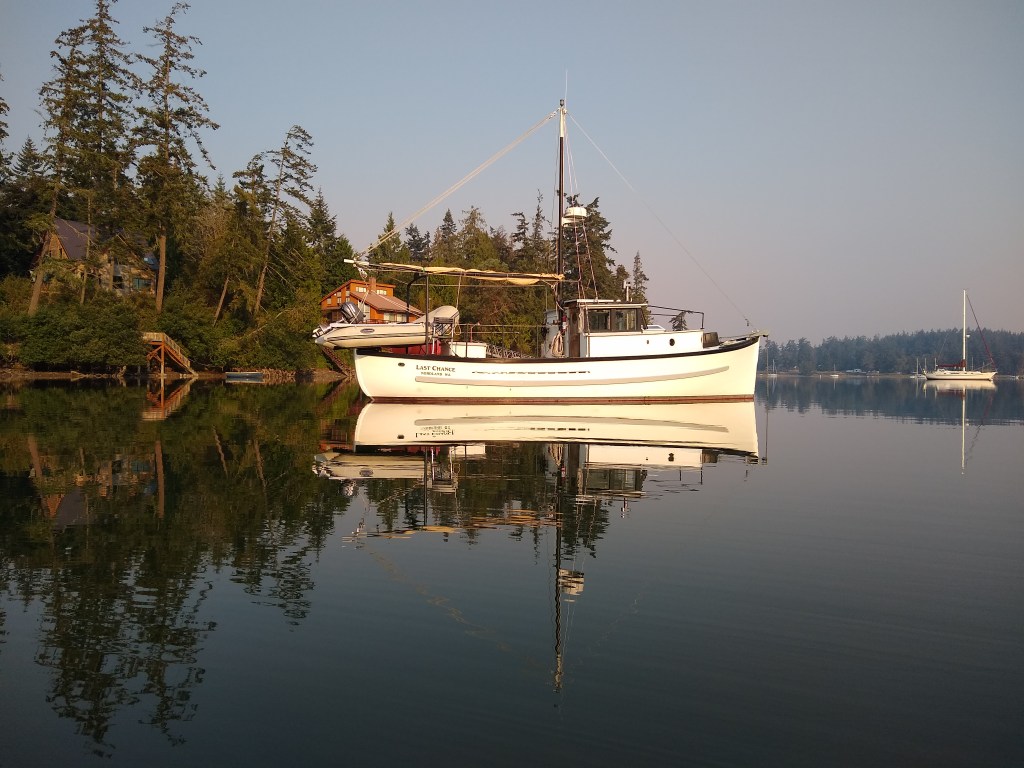
Mystery Bay is in the middle of Kilisut Harbor, while the cut is at the southern end. I still had a couple of miles to paddle. Just recently opened, I was unaware of any published information about the cut. But embracing the spirit of exploration, I didn’t search too hard. It would be what it was when I got there.
In the center of the tidal stream, with strong and steady strokes, I was able to keep forward motion, crabbing around and across the dogleg to the port side of the cut. The current runs along this edge with a deeper channel, but the uneven shore offers relief eddies. Rounding each mini-point put me right back into the stream, though I never feared I wouldn’t make it.

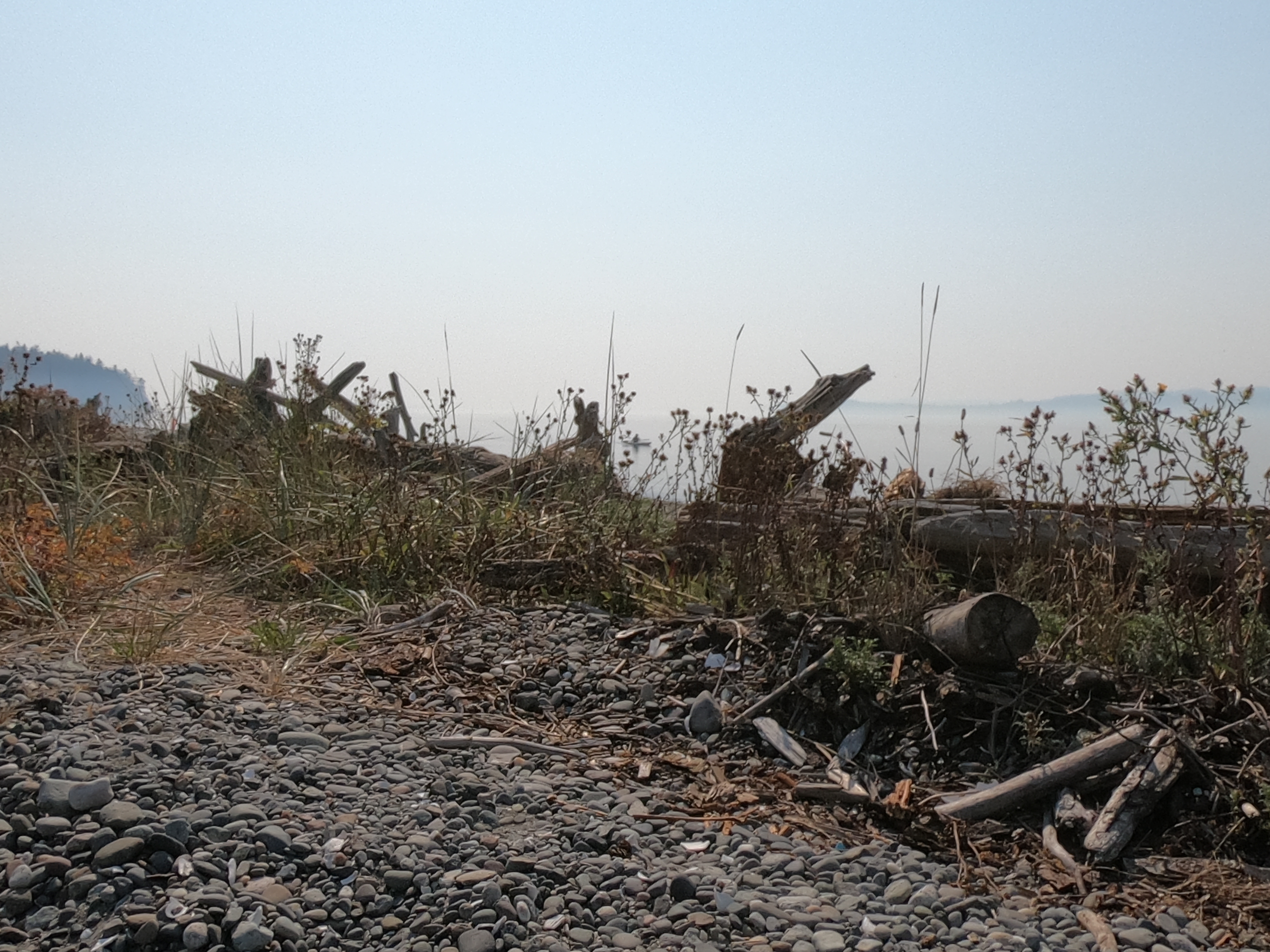

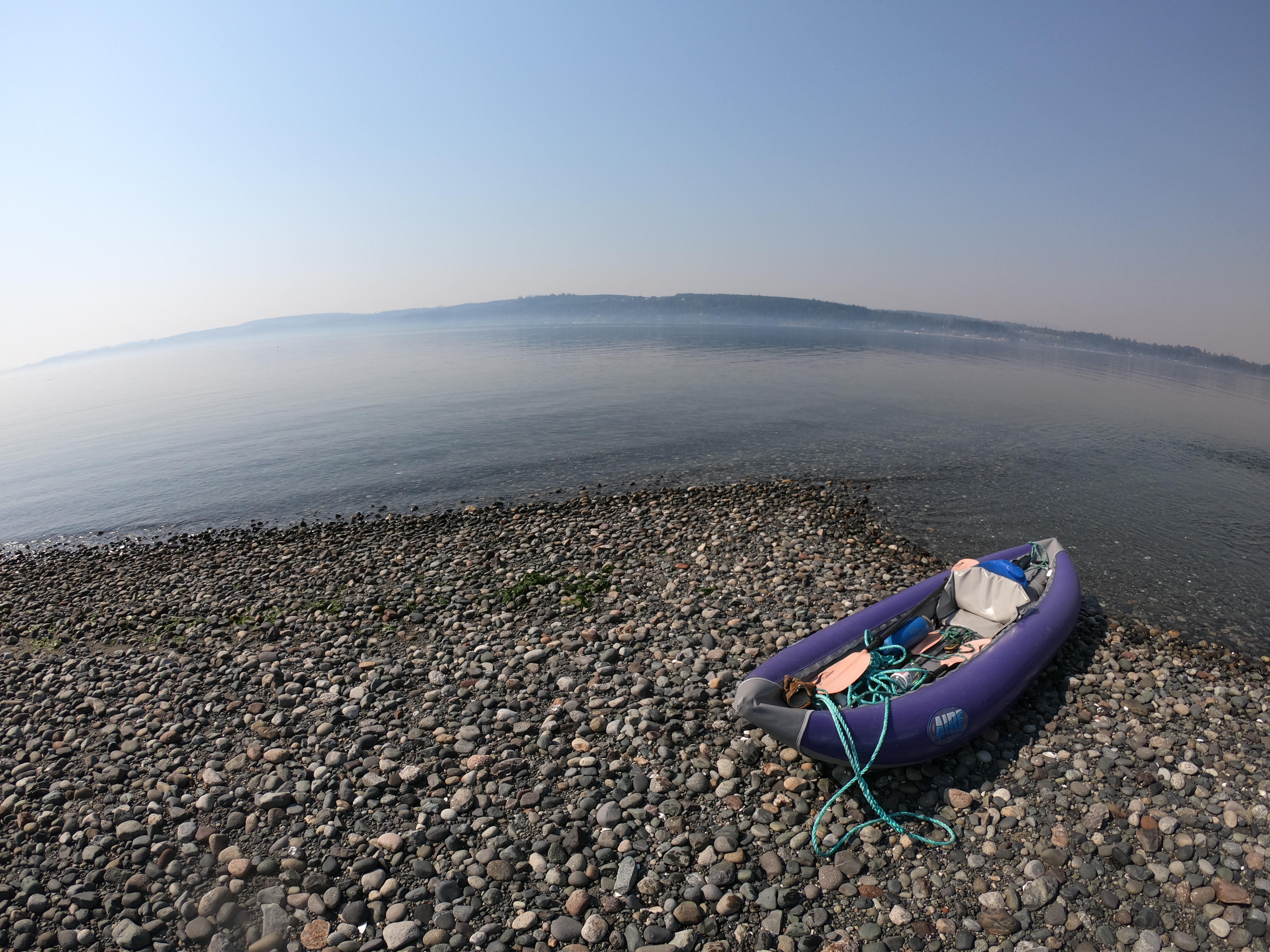
Prevailing, I rounded the spit to the hazy expanse of Oak Bay and landed the kayak for rest and refreshment. After my summit moment, I pushed the boat off the shore for the return trip. Paddling in the current, making four knots, I descended back into Kilisut Harbor. As I rounded the dogleg, the shallow inside corner that forced me into the current on the incoming trip was now exposed. With the depth decreasing, I was a little concerned about running out of water over the wide, shallow sandbank that extends into Kilisut Harbor. However, the kayak only requires a few inches of depth, and we glided over with no troubles.
I made it back to Mystery Bay just before the winds shifted to the North, having completed the main objective for my holiday weekend. Sampaguita and I would swing on the hook for the rest of the day and head back to Port Townsend the next morning. Paddling a newly accessible stretch of water was exciting, and got lucky with my ‘spirit of exploration’. Judging by the currents and depths witnessed, there are tidal states when it would not be navigable by even small boats.

Besides my amusement, it was evident the cut was also serving the purpose of exchanging water in the Harbor. During my paddle, Scow Bay, the lower half of Kilisut Harbor, was a murky brown with about one foot of visibility. The waters flowing through the cut were crystal clear and mixing in the Bay. With refreshed infrastructure for the islanders, improved water quality and habitat for plants and animals, and a new destination for small boat enthusiasts, I give the new cut a thumbs up.

Here’s some GoPro video of me transiting the cut: (Caution: This might feel like watching paint dry.)


 sailingwithjosh
 Sailing With Josh