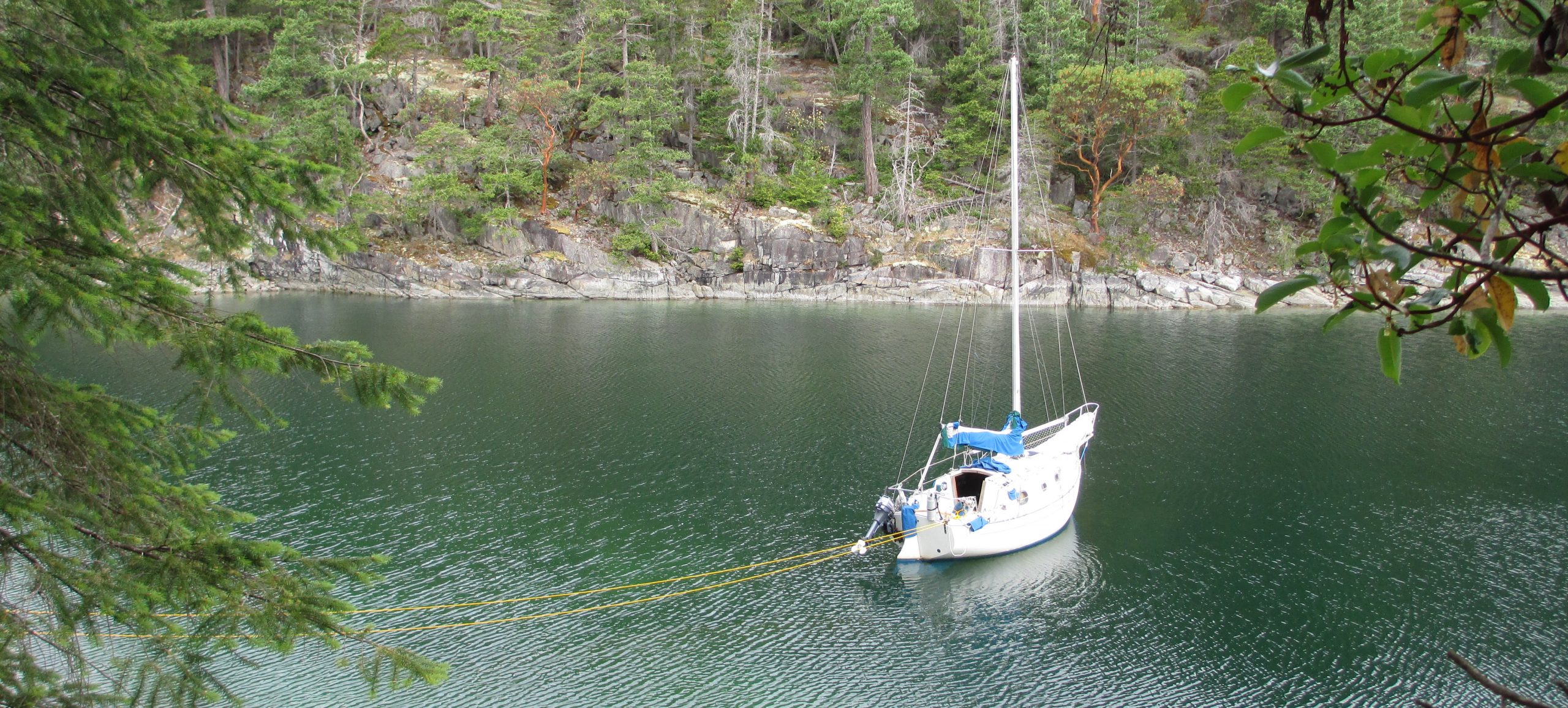
The Resourceful Sailor would like to thank Port Townsend Rigging (PTR) for assisting me with Sampaguita’s mast and rigging overhaul in 2021. Without their expertise, consultation, and kindness, it is hard to imagine having the incredibly satisfying and successful experience I did. They taught me so much it is impossible to write about the project without giving them a nod.
This originally appeared in the August 24, 2022 edition of ‘Lectronic Latitude
https://www.latitude38.com/lectronic/resourceful-sailor-builds-new-spreader-tips/
Thank you to Monica, ‘Lectronic Latitude, and Latitude 38 for publishing the latest Resourceful Sailor installment, The Resourceful Sailor Makes Rigging Alignment a Top Priority, on January 23, 2023. Also a thank you to Port Townsend Rigging for all of their support on the overhaul of Sampaguita’s mast in 2021.
Click below for the full story. Thanks for reading.
https://www.latitude38.com/lectronic/2023/03/27/#resourceful-sailor-adding-propane-tank-small-boat
The flattering folks at Latitude 38 and ‘Lectronic Latitude have done it again! They’ve published another Resourceful Sailor piece and I am grateful for it. This one is about the resourcefulness of the people who live and travel in the Arctic, a place I hope to visit again this summer. We are on our way and with all the challenges such a trip encounters.
A special thanks to Monica and the staff in the Bay Area for their continued support. Click the link below to read more.



The 2022 expedition I have joined through the Northwest Passage this summer is about to get underway. If successful, it will be my second transit. The first in 2019 was east to west. This second attempt will be west to east.
Leaving from Anacortes, WA, it will be quite some time before we reach the Bering Strait, the actual beginning of the Passage, with a hopeful arrival to France in September.
If you have interest in following Sailing With Josh’s progress, there are a few ways to do so.
- This website —- When internet access and time permits, I will be posting here. —-www.sailingwithjosh.com
- Mapshare —- via the inReach —- share.garmin.com/SailingwithJosh
- Facebook —- via the inReach (with a link to Mapshare)—- https://www.facebook.com/SailingWithJosh
- Twitter —- via the inReach (same as Facebook) —-https://twitter.com/SailingWithJosh
- Instagram —- A Local Sailor will post pictures here when internet and time permits. —- https://www.instagram.com/sailingwithjosh
Thank you for your support and for following Sailing With Josh. I hope you have a great summer.
Fair Winds,
Joshua Wheeler
If you live on a boat during the winter, in the Pacific Northwest for example, you know it requires constant condensation management. The Resourceful Sailor explains one modification he undertook on Sampaguita, a Flicka 20, to increase air circulation, mitigate condensation, and promote drying in an article published by Latitude 38‘s online magazine, ‘Lectronic Latitude, on April 25th, 2022.
Now is a good time to do some spring cleaning and take notes on those hidden away places trapping moisture on your boat.

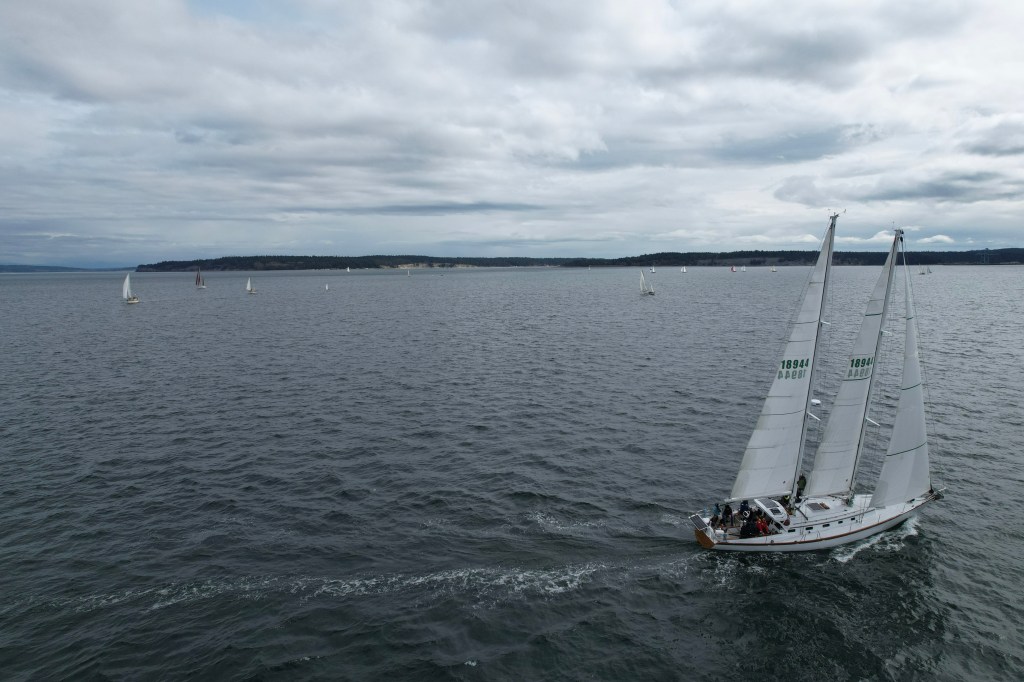
The southeasterly wind was perfect! Under full main and jib, Sampaguita, a Flicka 20, charged toward the starting line for the Cruising Two class, just under hull speed and close-hauled. One hand on the tiller, one on the mainsheet, Olivier luffed the main in the gusts to keep the rail out of the water. I fine-tuned the jib. The sound of the water rushing by would charm any old salt as we sat on the high side, grinning ear to ear.
It was March 26th, 2022 on Port Townsend Bay, and the 31st Annual Port Townsend Shipwrights Regatta was underway. A heavy, full-keeled, liveaboard cruiser like a Flicka 20 isn’t much of a racing sailboat, but the Shipwrights Regatta isn’t much of a race. At least for some. So it’s cool. The regatta is really about community and participation. With four classes of boats: Racing, Thunderbirds, Cruising One, and Cruising Two, there was a place for every sailor and every sailboat.

As Sampaguita rounded the windward mark, we eased out the main and headsail, the wind moving to our starboard aft corner, and she leveled out on a broad reach. Ahead of us, the Thunderbirds were dropping their spinnakers and rounding the leeward mark, wrapping up the first of their two laps. After the reach mark and with a fading wind, somewhere between the French baguette and the coconut cookies, I made the call to drop the jib and hank on the genoa.
Initially scheduled for February 26th, the race’s organizers, the Port Townsend Sailing Association, chose to postpone the race due to forecasts for high winds. It was a good call as the day saw sustained winds over 30 knots and gusts over 50. With all the lead-up hype that occurred, canceling seemed too anti-climactic. Plus, it would deny the generous local sponsors the opportunity to buy the participants beer and pizza. Too much was at stake.
After rounding the leeward mark, having traded places with the Ranger 24, Tiny Dancer, and trying to keep pace with Pneuma, Sampaguita sailed into light air. A wind shift was afoot. With the four classes spread across the course, the wind hole set sails flapping as it moved from west to east. Strategies and headings changed as boats searched for air. When the westerly filled in a few minutes later, several boats converged at the second lap’s windward mark. Tiny Dancer‘s circuitous outside route had paid off, now a boat length ahead of Sampaguita, with Flapdoodle and Apogee close behind.
The Port Townsend Sailing Association’s committee boat, Committee, recently repowered with electric propulsion, was calling the shots for the day. Personed by PTSA board members and volunteers, they raise the flags, sound the horns, and other who-knows-what shenanigans. Pacific Cup-bound Sir Isaac won the Racing class and took line honors too. Next came the Thunderbirds, Port Townsend’s de facto one-design class won by the always competitive, Owl. The Cruising One class, made up of the larger cruising boats with the most entrants by far, saw the dark horse Amelie seize the day.

The west wind picked up as Apogee, Flapdoodle, Tiny Dancer, and Sampaguita battled it out on the backstretch. Though not all in the same class, as the saying goes, ‘If you can’t race the ones you love, race the ones you’re with.’ Or something like that. At the reach mark (which wasn’t anymore because of the wind shift), Flapdoodle and Tiny Dancer tacked over while Apogee and Sampaguita just trimmed in the sheets. It was our turn to take the outside route. When we reached the final leeward mark, we were several boat lengths ahead of Tiny Dancer and neck and neck with Flapdoodle on a downwind leg to the finish. Apogee crossed the line, and Sampaguita beat Flapdoodle by the length of her bowsprit.
The after-party was at the Northwest Maritime Center in downtown Port Townsend. Alcoholic lubrication from the Port Townsend Brewery was ready on arrival, with high stacks of pizza boxes arriving soon after. With 33 boats showing up for the race, it appeared all represented and having fun. Results and perpetual awards were given. Some were flattering, like the Wire Cruising Boat awarded to Amelie as the first cruising boat to finish. And others, just funny, like the Direction Helmet, given to fan favorite and Sampaguita‘s nemesis, Tiny Dancer. All were received with modesty and good nature.
In all honesty, Sampaguita had lost before she even started. Steering clear of the starting line crowds, she was too far off the mark to be competitive. Olivier and I hardly noticed. We were just enjoying the great sailing, being part of the event, and the delicious lunch his wife had prepared for us. If you missed the race this year, the 32nd Annual Port Townsend Shipwrights Regatta will be here before you know it. Start planning now.

Click Here for the Port Townsend Sailing Association website.

I will be attempting a west-to-east transit of the Northwest Passage in the summer of 2022 as crew aboard a French-owned and built Boréal 47 sailboat. This trip begins in Anacortes, ends in Brittany, France, and starts in early May. I previously transited the NW Passage in 2019 from east to west, crewing aboard Breskell, a 50-foot cold-molded sailboat. That trip began in Newfoundland and ended in Port Townsend. So you could say it’s time to unwind.
In 2019, Breskell‘s owner had dreams of transiting the Northwest Passage. They also needed to get the boat from the east coast of North America to their home in Port Townsend, Washington, and the northern route was the shortcut. The NWP was Plan A, the Panama Canal, Plan B. I saw an opportunity of a lifetime and signed on as crew.
In 2022, the Boréal 47’s owner needs to get their boat from Anacortes, Washington, to their home in France. Having met them while I was transiting the NWP aboard Breskell in 2019, they have an affinity for high latitude expeditions. The NWP is Plan A, the Panama Canal, Plan B. I expressed interest in participating, and when other candidates backed out, I stepped in.
Both are large centerboard sailboats, atypical to an American but not for Europeans. I have learned this to be a virtue in northern, shallow, poorly charted waters. Breskell was cold-molded mahogany built by the owner/shipwright in 1985. Inook is an aluminum, modern production boat.
I find it interesting that the Northwest Passage has been Plan A, and the Panama Canal has been Plan B for both boats. I am inclined to take the less popular path, so this suits me. While I have not yet transited the Panama Canal, and its legacy is not lost on me, dread more than excitement comes to mind. I think it’s the high cost and regulation that turn me off.
There is no “event” around this 2022 Northwest Passage attempt, while Breskell did have a “climate change awareness” campaign. In my opinion, that ship has already sailed, pun intended. My observations are that most such promotions are, while sincere, angled to acquire outside sponsorships and financial support. I understand the implications of transiting the Northwest Passage but am uncomfortable disguising personal ambitions with a ’cause’ at this time. Additionally, the boat’s owner doesn’t wish to have the media attention necessary for such a promotion.
Leaving Washington State in May, it is a long way to get to the Bering Strait, the western gate to the Northwest Passage. There is essentially the month of August to transit the Canadian Archipelago if the ice clears at all. With success, this puts our arrival in Europe sometime in September.
There are no guarantees of success or even survival, as usual. There are also personal, weather, geopolitical, and pandemic uncertainties that could impose themselves to change or halt the expedition. However, the boat is proven, and the owner and I already have one transit under our belt, so the planning moves forward.
Having transited in 2019, I already have much of the gear necessary and knowledge of a few things I wished I had. April will see continued preparation, wrapping up my work, and tidying up Sampaguita. The owner arrives on April 30, and we will prep the boat for launch on May 6, with a need to be in Port Hardy, British Columbia, by May 16.
I will post updates as our departure approaches with ways to follow Sailing With Josh through the Northwest Passage.
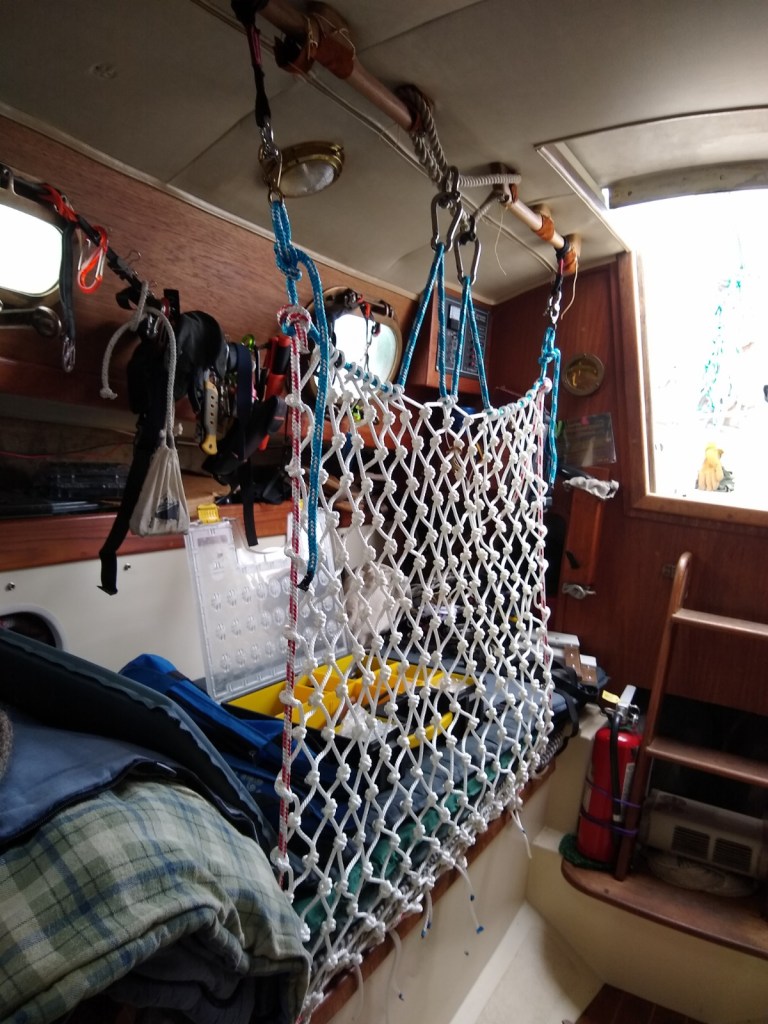
When faced with the dilemma of how to install a lee cloth on a small boat, The Resourceful Sailor decided a lee net was more suitable. It was more versatile, less costly, and more adaptable to Sampaguita‘s anchoring options. This is the subject of the latest installment published by Latitude 38 and ‘Lectronic Latitude on March 21, 2022. I can’t thank Monica and the crew enough for their support.



 sailingwithjosh
 Sailing With Josh