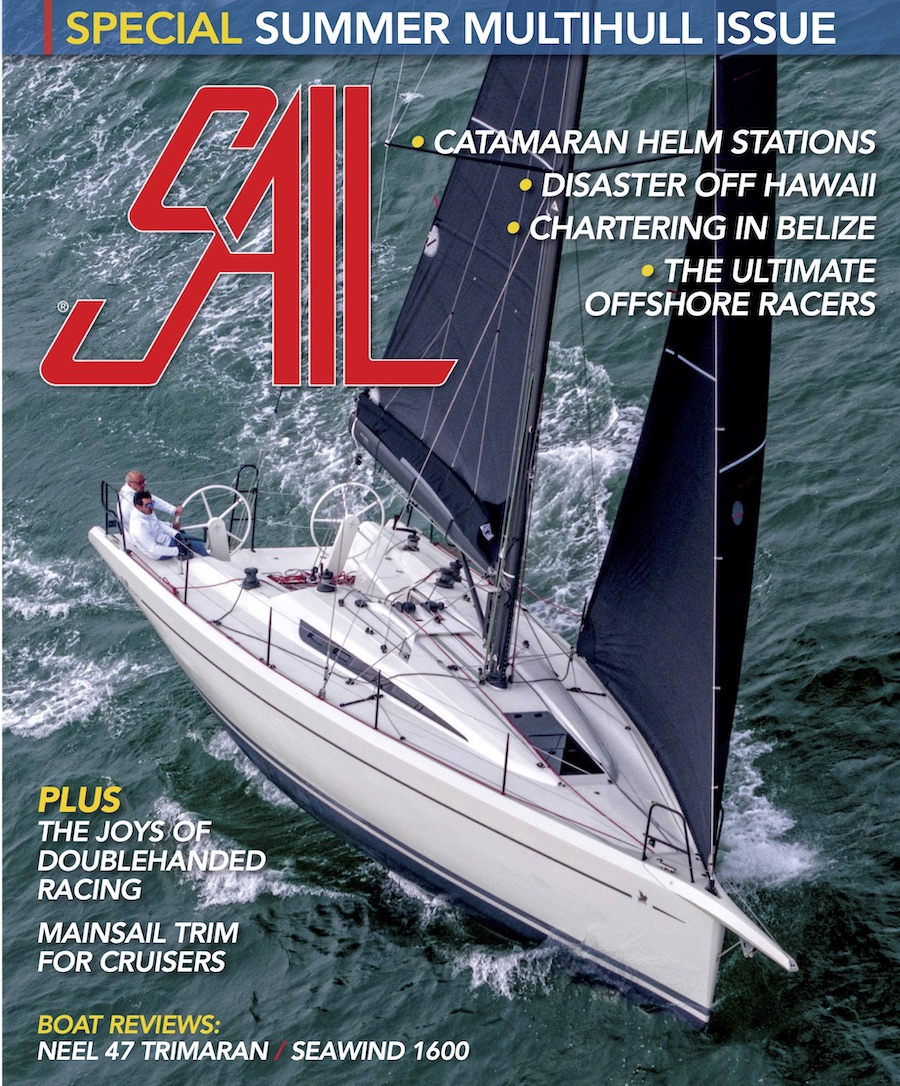
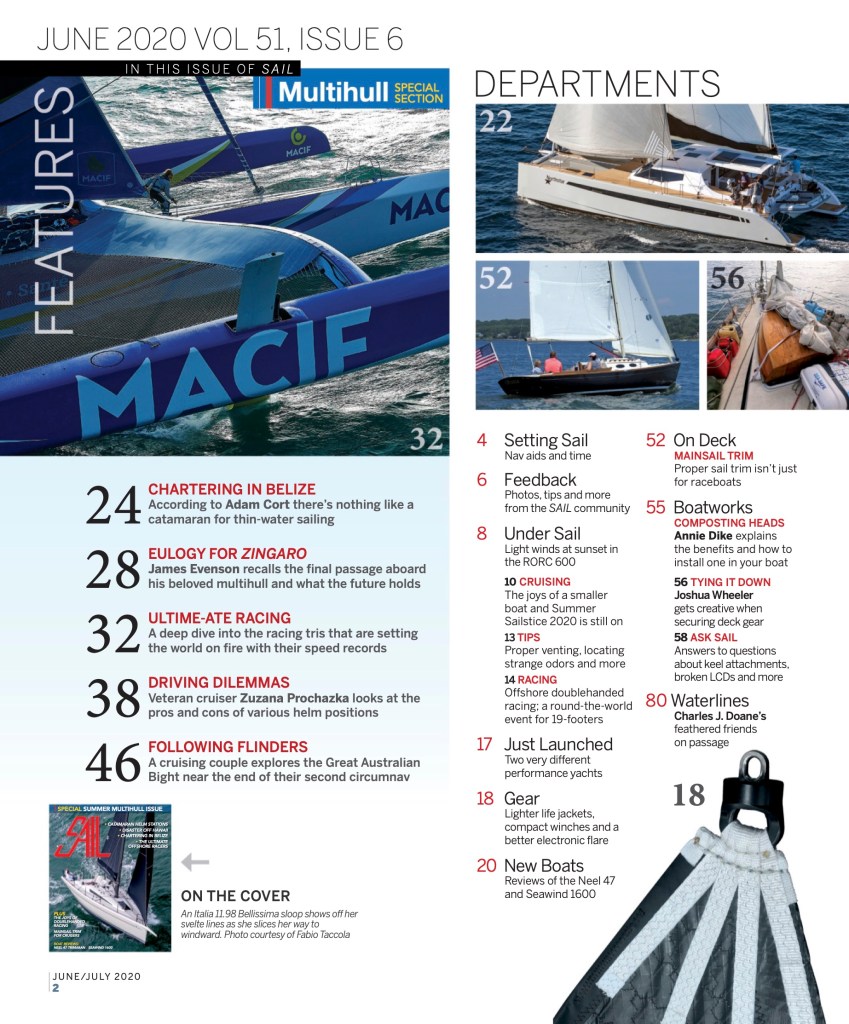
When Captain Olivier Huin asked me to secure the gear on the deck of Breskell for her transit through the Northwest Passage in 2019, I was happy I knew my knots. A special thank you to Adam Cort for publishing my article, Marlinspike Seamanship in the Arctic, in the June 2020, (Vol. 51, #6) issue of Sail Magazine.
Here is a link: https://www.sailmagazine.com/diy/know-how-marlinspike-seamanship-in-the-arctic
The article is about getting creative when securing deck gear and gives insight to an angle of logistics for offshore sailors. It involves seamanship, marlinspike, and making do with what you have. I hope you enjoy and are inspired to take on your own adventures.

Sail Magazine is available through subscription and where sailing magazines are sold.
I would like to thank Joe Cline, Andy Cross, and all the crew at 48° North for choosing and publishing my poem about the meaning of May. It appears in the Lifestyle section of their online version, dated May 14, 2020. You can view it by clicking this link:
48north.com
48° North is a long time Pacific Northwest sailing magazine, which in 2018 became part of The Northwest Maritime Center in Port Townsend, WA. Even more recently, they brought in Pacific Northwest’s biggest boating website, Three Sheets Northwest, combining to bring you both analog and digital formats under one name. I have been fortunate enough to have been published in both.
Thank you for taking the time to check it out.


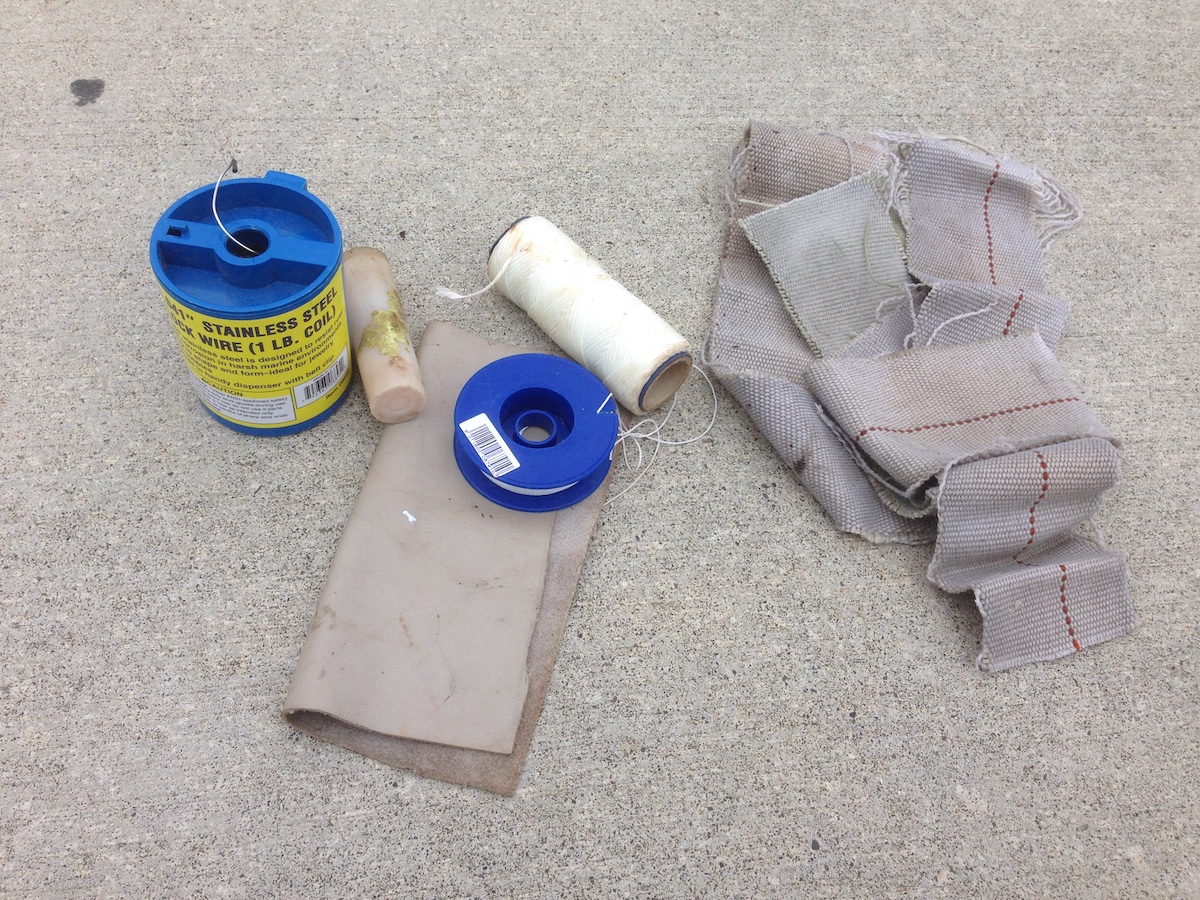
When you have an itch, scratch it. When you have a rub, guard it. Chafe is your enemy. The Resourceful Sailor has a new installment available on Latitude 38′s online magazine, ‘Lectronic Latitude. A special thanks to the crew and Tim Henry for keeping the sails full in these curious times. I hope you enjoy it and thank you for checking it out.
CLICK HERE for the link to the article.


A boat that wants to achieve balance is motivating, fun, and easy to sail. An endearing quality of Sampaguita, my Pacific Seacraft Flicka 20, is her willingness to steer herself. I remember the feeling of excitement, having just changed boats from a squirrelly Columbia 26 MKii, when I first realized how easy it was to balance the Flicka. It was easy to imagine the fun and freedom I would have. When single-handing in coastal waters, this quality offers some relief from the helm without additional equipment, yet requires enough attentiveness to maintain safe, situational awareness.
I don’t think Sampaguita is an anomaly, so I’ll give kudos to the designer of the Flicka 20, Bruce Bingham, and his muses. New England workboat inspiration for good lines, a full keel for tracking, a bowsprit for a leveraged sail plan, and a large transom hung rudder. All the usual suspects for creating a stable, well-balanced boat. Thanks Bruce.
I have Sampaguita rigged with a touch of weather helm. When I am racing close-hauled(“is he joking?”), I can sheet the main in tight for maximum speed, a little extra heel, and rounding up for overboard safety. But, if I ease the main a bit, we find her sweet spot for balance, and she will happily take over. It backwinds the luff of the main, but creates better flow over the half-battened leech, streaming the telltales off.
Video – https://www.youtube.com/watch?v=stDaGMOuPsM
Like any sailing partner, there are compromises. If I let her make her own way, we will concede a little in speed and heading. 5-15% and maybe a few degrees, respectively. On an afternoon sail in Port Townsend, when close-hauled with the main sheeted in tight and my fingers always on the tiller, we averaged 4.3 knots. With the main luffed enough to balance a still well-trimmed jib and no hands on the helm, 3.8 knots. If the heading suffered, it was because Sampaguita took a little longer to adjust to variations in the wind and waves than a focused helmsman. Wind speed, point of sail, and wave state are significant variables in performance.
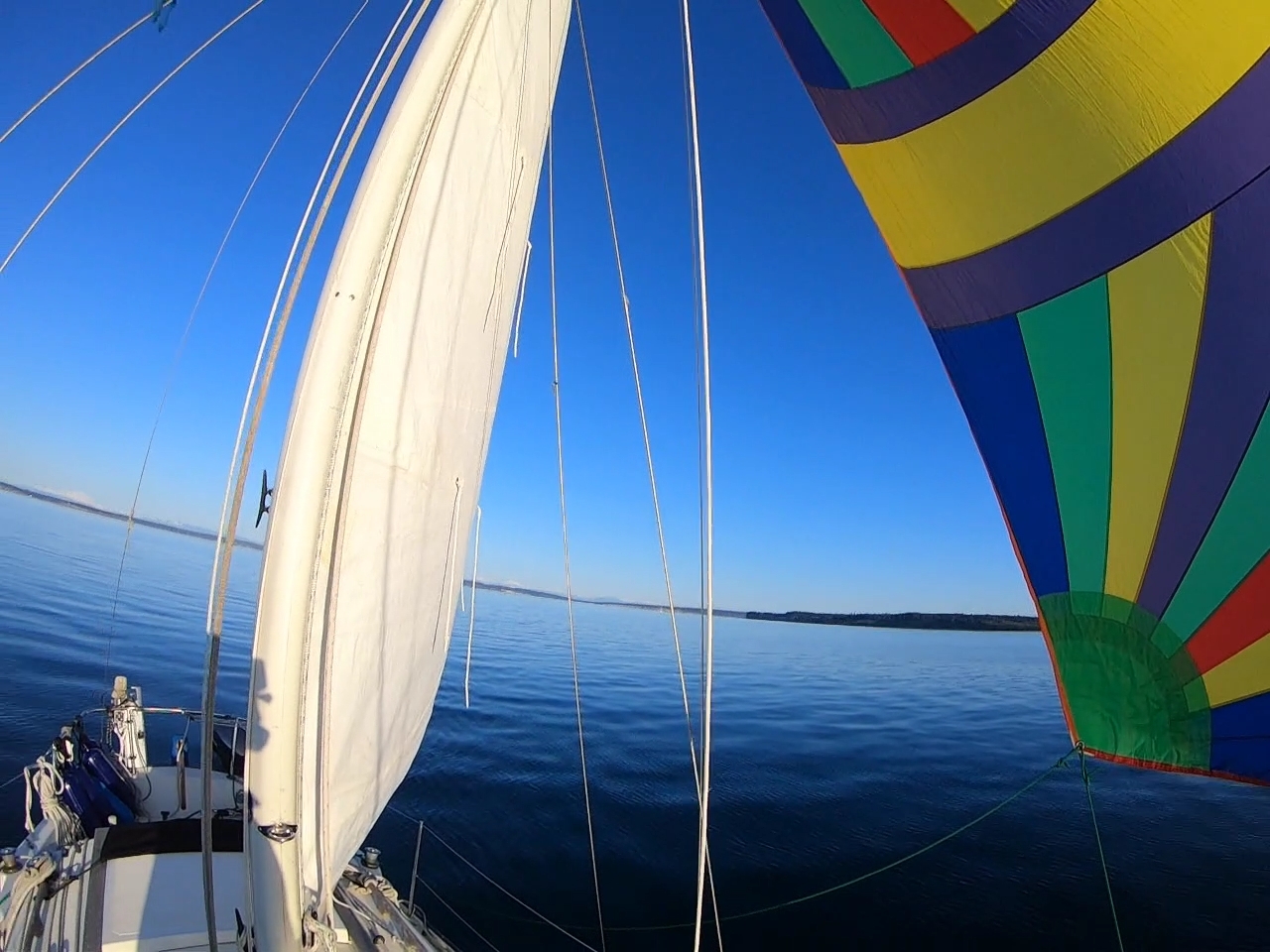
Sampaguita has sailed herself with most sail combinations and on every point, including the asymmetrical spinnaker and wing-and-wing. However, it is most predictable to balance her when she is sailing close-hauled or on a close reach. The 140% genoa and the spinnaker will often overpower the main too much to be hands-free. A combination of the 100 or 80% jibs, with the mainsail and its reefs, will usually do the trick.
Video – https://www.youtube.com/watch?v=xs9zXyck8rI
Understandably, quieter seas are better for balancing, especially when headed off the wind. Reaching and close-hauling, the boat can handle more. I recall sailing across the Strait of Georgia from Nanaimo to Plumper Cove Marine Provincial Park in BC, Canada. We sailed close reached for over ten nautical miles under working jib and a single reefed main with 15-20 knots of SE wind and 2-4 foot seas. The only time I had to adjust the helm was to steer around a fishing buoy directly in our path.


For those readers who are more technically and financially inclined, I have heard of electronic autopilots and self-steering wind vanes. Sampaguita came with an autopilot, but it was not wired safely and hasn’t been repaired. A trim tab wind vane would be well suited for her, but yet to transpire.
For the past seven years, I have enjoyed the simplicity of balancing the boat through sail trim. Simple is more zen for me, I guess. I am always impressed by how well Sampaguita handles herself and what a pleasure she is to sail.
Bricolage – French for Do-It-Yourself! When S/V Breskell transited the Northwest Passage in the summer of 2019, there was a bit of bricolage along the way. The link below offers a new Resourceful Sailor article on Latitude 38‘s online magazine, ‘Lectronic Latitude, highlighting a few examples. Thanks to Tim Henry for publishing it. I hope you enjoy and thanks for checking it out.
Click Here for a link to the article.

Photo by Eric Maffre, 2019
The total: June 26-Sept. 26, 2019
The refit: June 26-July 16 (21 days)
The voyage: July 17-Sept. 26, 2019 (72 days)
St. John’s, Newfoundland, CA to Port Townsend, Washington, USA, via Greenland and the Northwest Passage.
The miles: 6658(ish) Nautical Miles
The boat: Breskell – an old timey, lo-tech, cold-molded sled
What is next for me? A million dollar question! But no worries….things have a way…..



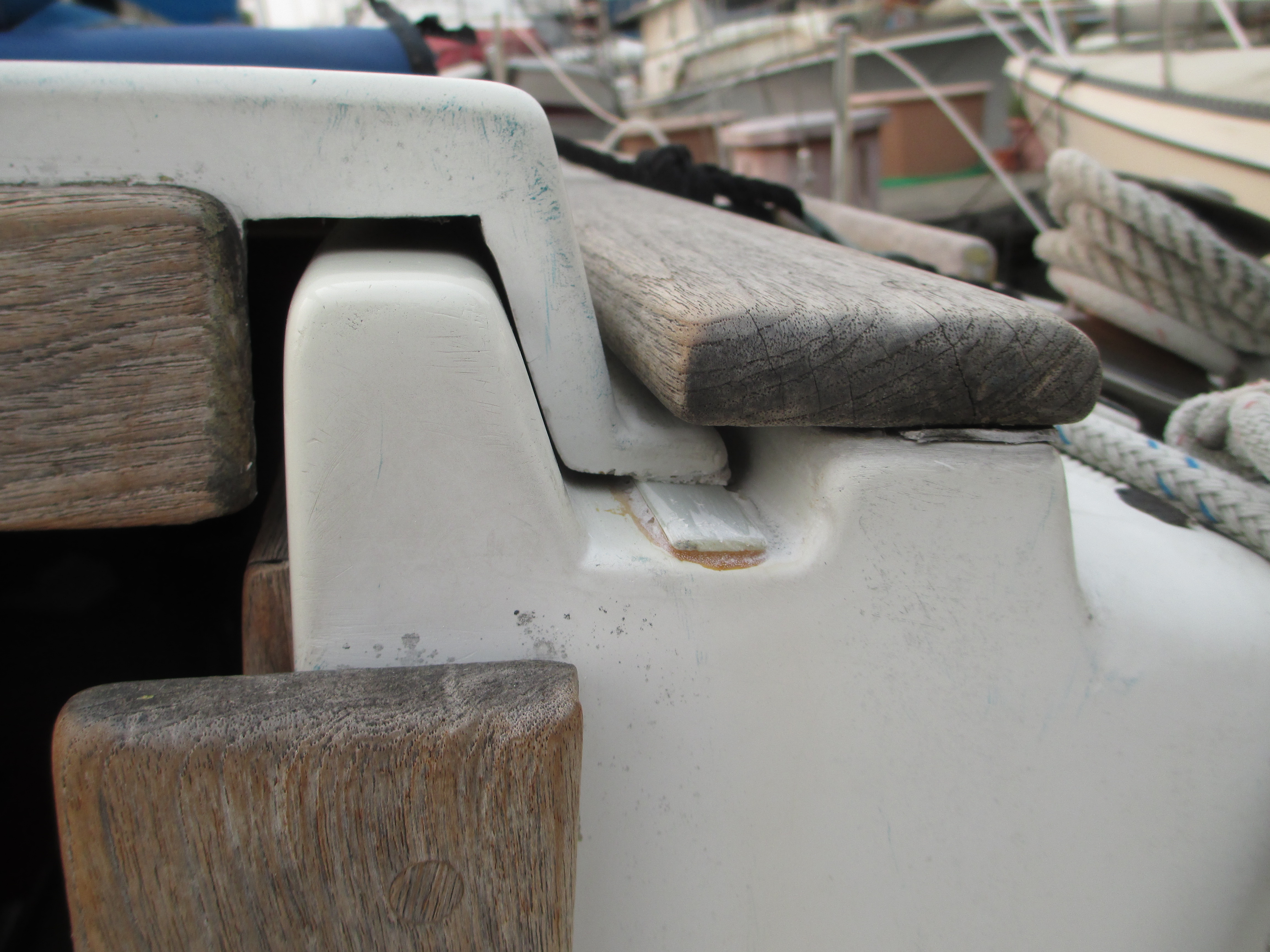
Another Resourceful Sailor Series article dropped on Latitude 38‘s online magazine, ‘Lectronic Latitude, on August 5th while I was away transiting the Northwest Passage aboard S/V Breskell. It’s called Sacrificial Sliding Hatch. It’s about a quick fix (band-aid) for the erosion that can occur on a Flicka 20 hatch over the decades. Thanks to Tim Henry for the publication(his name mistakenly appears as the author.)
Click Here for a link to the article.
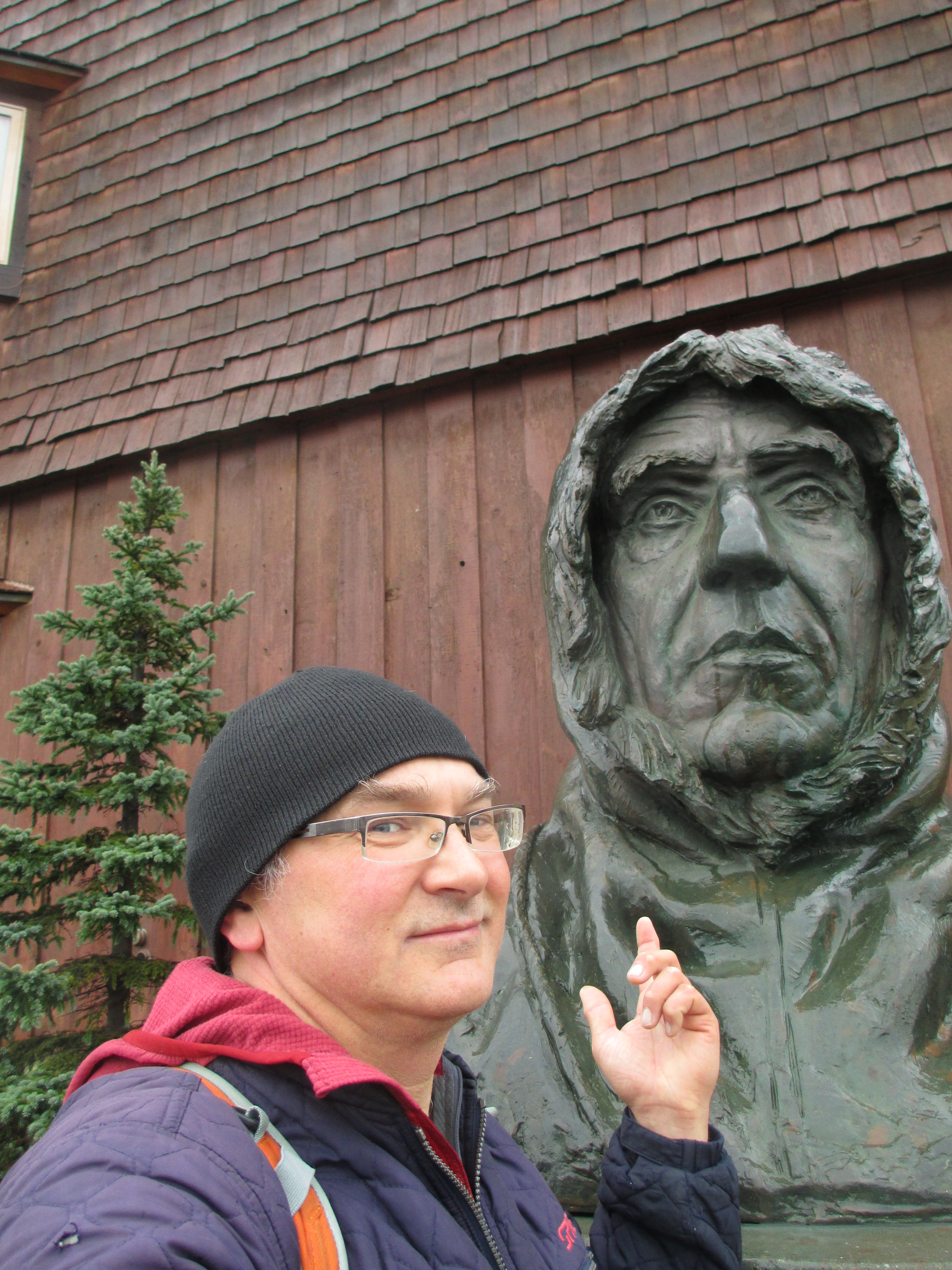
Me and Roald Amundson
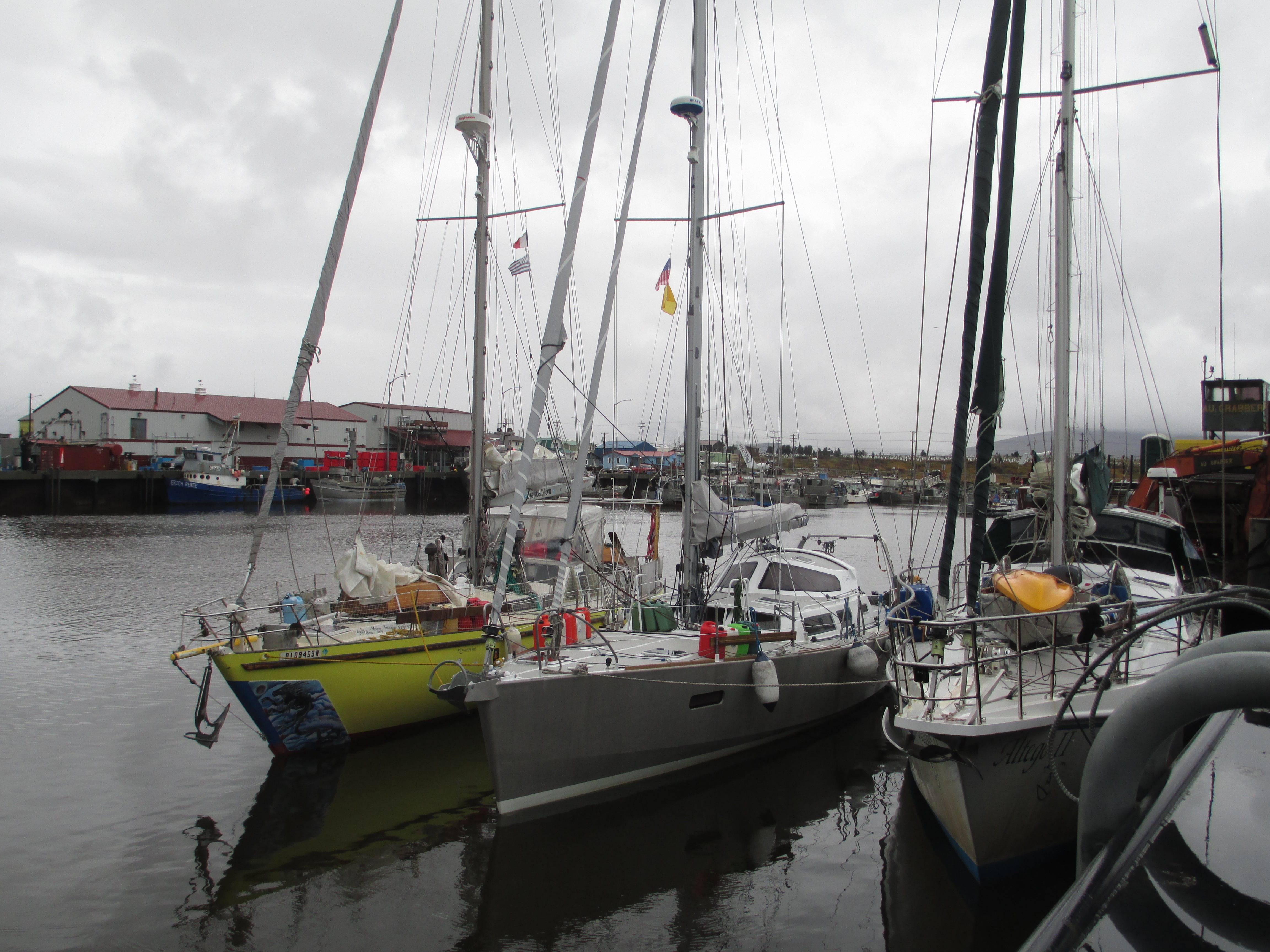
NW Passage boats in Nome
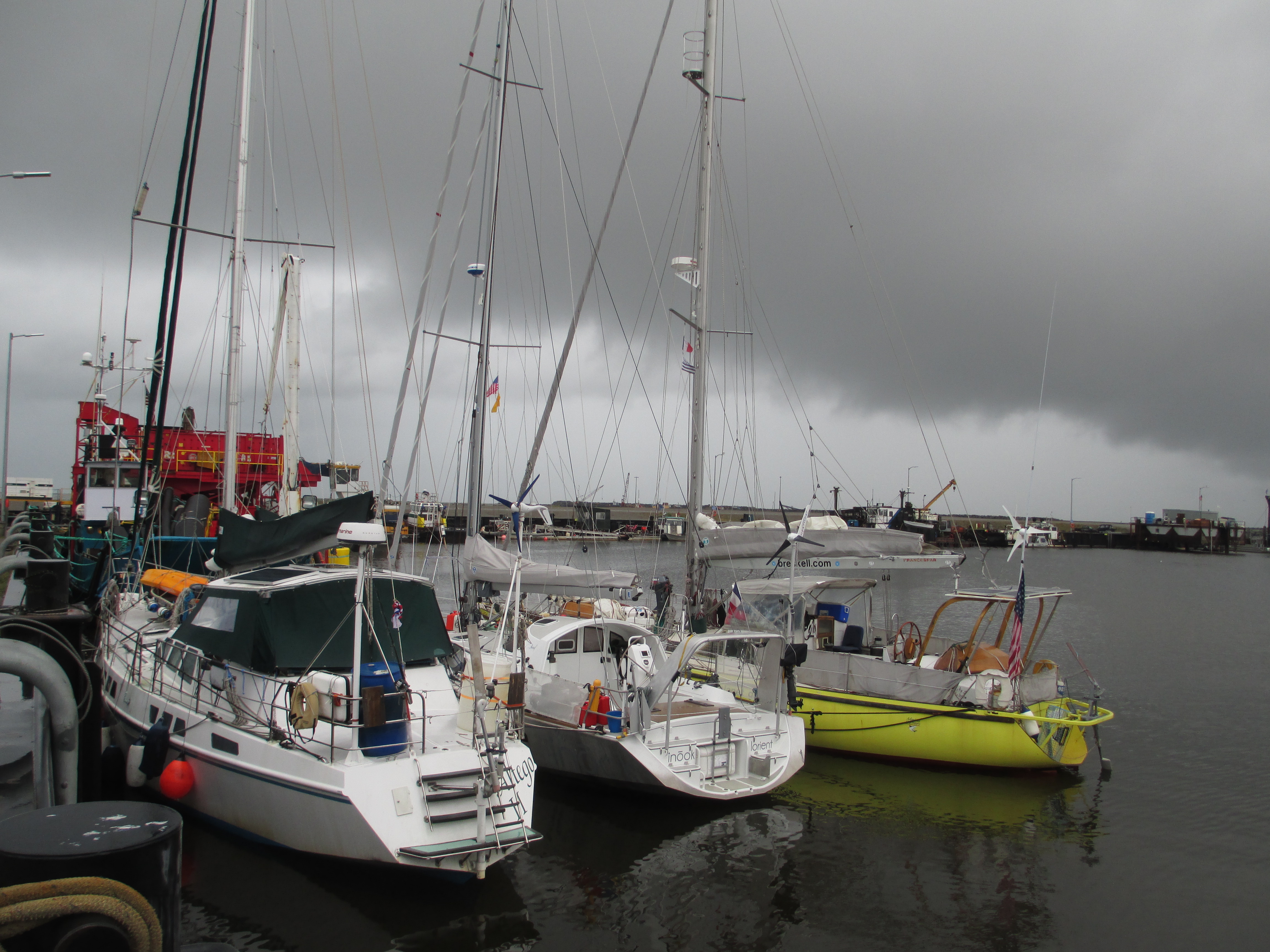
Northwest Passage Finishers in Nome
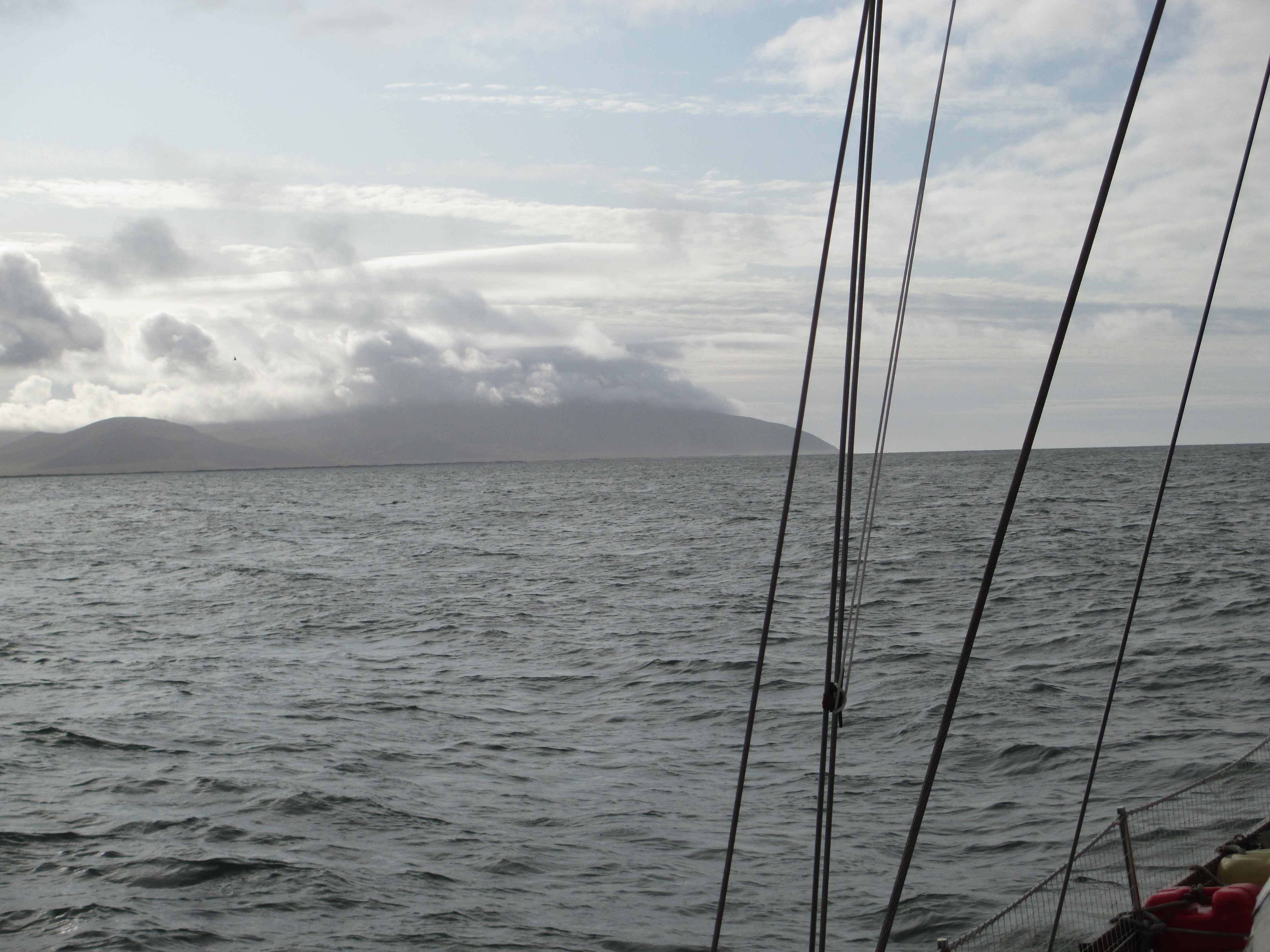
The Bering Strait
People wonder where the photos are, as if the internet grows on trees. But there are not trees in the Arctic. We landed in Nome yesterday after passing through Bering Strait the day before, which is our official finish line for doing the Northwest Passage. FACT. Here in port are two other boats we had met along the way, also finishers. Altego 2 of the Czech. Rep. and Inook of France. Breskell is on the outside of the raft.
And a picture of me with one of my favorite bad*^s explorers, Roald Amundson.
Three reasons boats might not make it through the Passage this year. 1 – mechanical failure, 2 – poor seamanship, 3 – poor planning. Notice that ice is not one of the reasons.
Our next and final leg is to get the boat to Port Townsend.
Here is the inReach Mapshare URL for following Sailing With Josh as I continue on with Breskell’s 2019 attempt of the Northwest Passage.
You can also follow the Sailing With Josh Facebook page for updates.
We are presently rafted up in Sisimiut, Greenland preparing to depart across Baffin Bay.
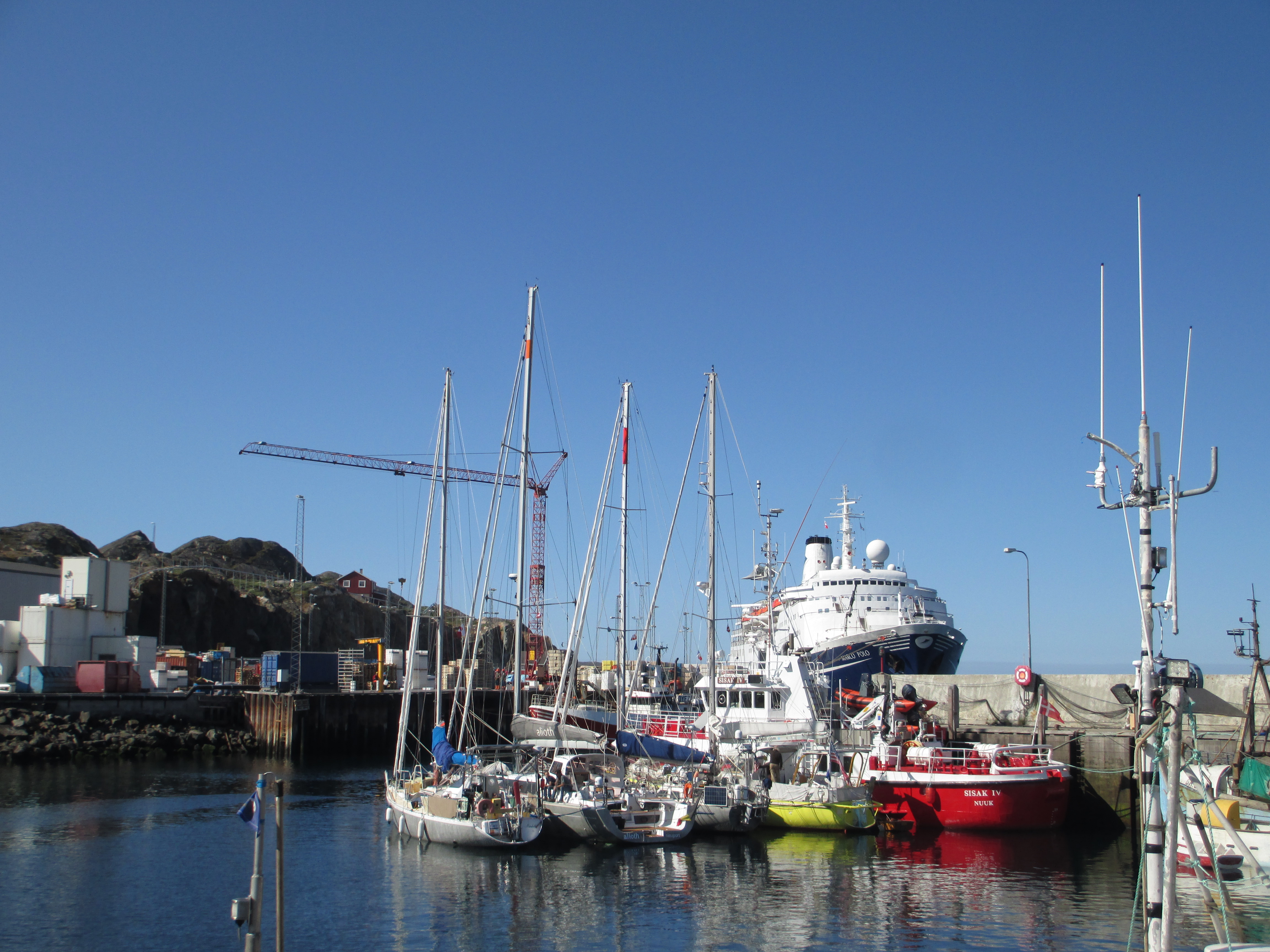
Today, I fly to St. John’s, Newfoundland, Canada, to meet up with Breskell and Olivier Huin to prepare the vessel for the voyage of a lifetime.
I am sitting at the South Gate, in Sea-Tac airport awaiting my flight. That’s Seattle if you were unsure. My friend dropped me off at 12:15 for my 4:33 flight in an effort to a) miss traffic, b) get me plenty of time to check my gear, c) make it through processing and security in a relaxed manner.
Traffic was not too bad, which I am thankful for, mostly for my friends sake. I was able to check my bags curbside which was a relief, as I had enough gear to make man-hauling a serious chore. I realized I have never traveled by air with this amount of gear. This upcoming sailing endeavor requires being prepared, with limited intel. The gentleman at the kiosk was refreshingly chipper and helpful, and got me checked in with ease. I was concerned about one of the bags being overweight, but alas, it came in spot on the limit. Yes, exactly as planned!
The security check point had an epic line. I had plenty of time, so I decided to remain relaxed about it and roll with the situation. The adage, attitude makes all the difference, applies here. When I finally arrived at Checkpoint #2, I used five bins for my carry-on screening. Shoes, overshirt, toiletries and pull out all of the electronics and other gear that you know will look weird on the x-ray. Like the water bottle with flashlights and batteries inside. In my effort to make it easy and transparent with all the gear, I forgot to remove my belt. Ha, that meant I needed to get the full pat-down with the “second observer.” No worries and no stress though. “What’s that in your pocket?” “Oh, you mean these earplugs?”
One of the carry-ons had to have a personal search too. “Okay, sure.” As the agent unpacked the bag, she found some wet wipes, a last minute addition for which I had checked the TSA website to see if they were admissible. “Oh, this must be it. I’ll just have to swab this” she said. “Sure, okay.” So she swabbed it and, of course, it was fine and she sent me on my way.
My next task was to find my gate, S4. Hmmm, I walked in one direction for about seven minutes before I realized I was headed to N(North) gate. I backtracked and saw the signs for A,B and S gate. So I walked that way for about seven minutes and soon realized it was all A gates. Duh, look at a directory. It turns out that the S gates are the ones you need to get on the train loop for. But, no worries, there’s plenty of time.
So far, so good as I wait for my flight. While things are going well so far, the day of travel has only begun. So much can still happen. Relax and stick to the plan. Enjoy the ride. For now, I am happy to be exiting Ballard and it’s dual culture of progressive expansion and degeneration for parts less populated.
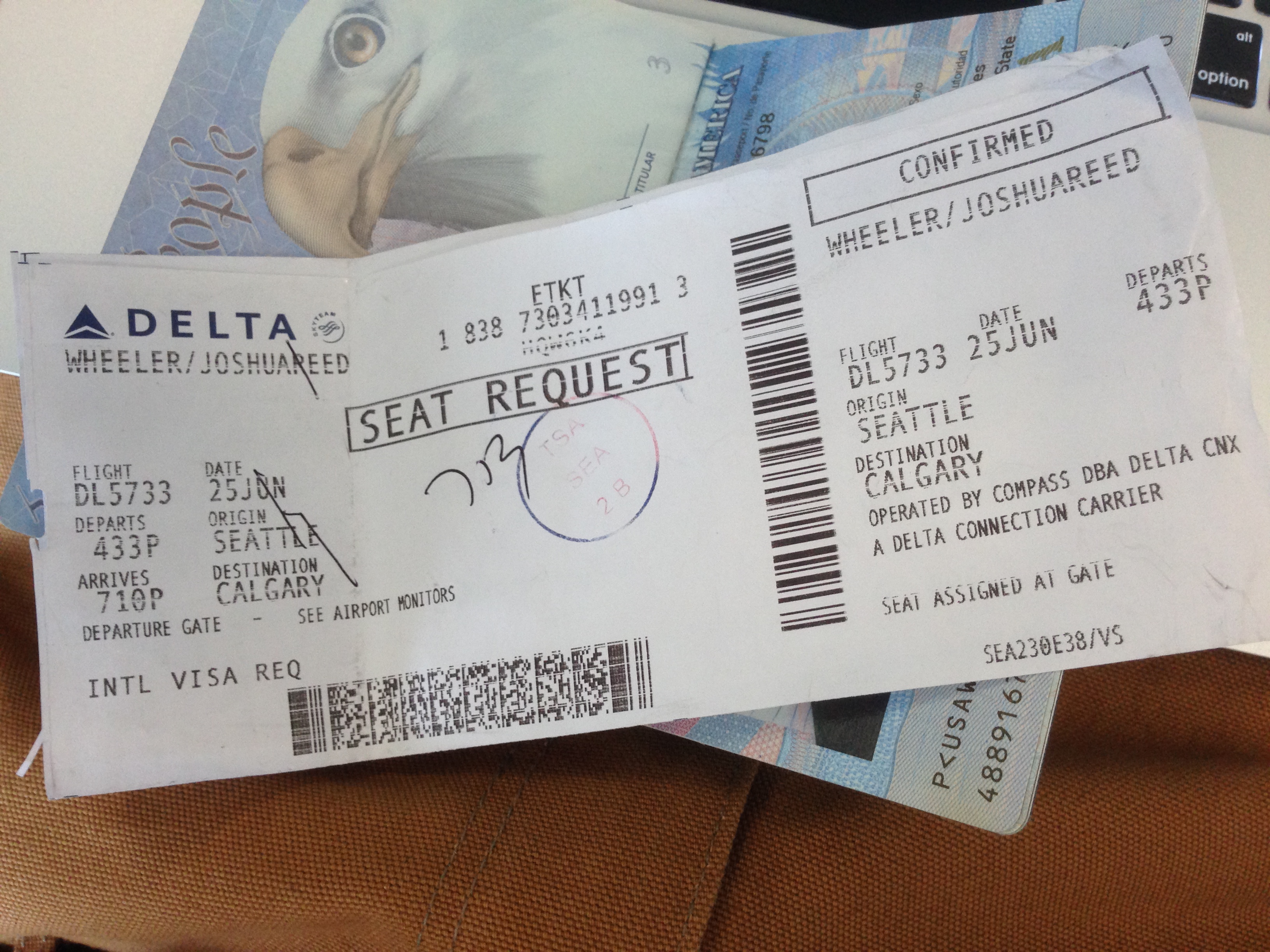
“St John’s, here I come.”
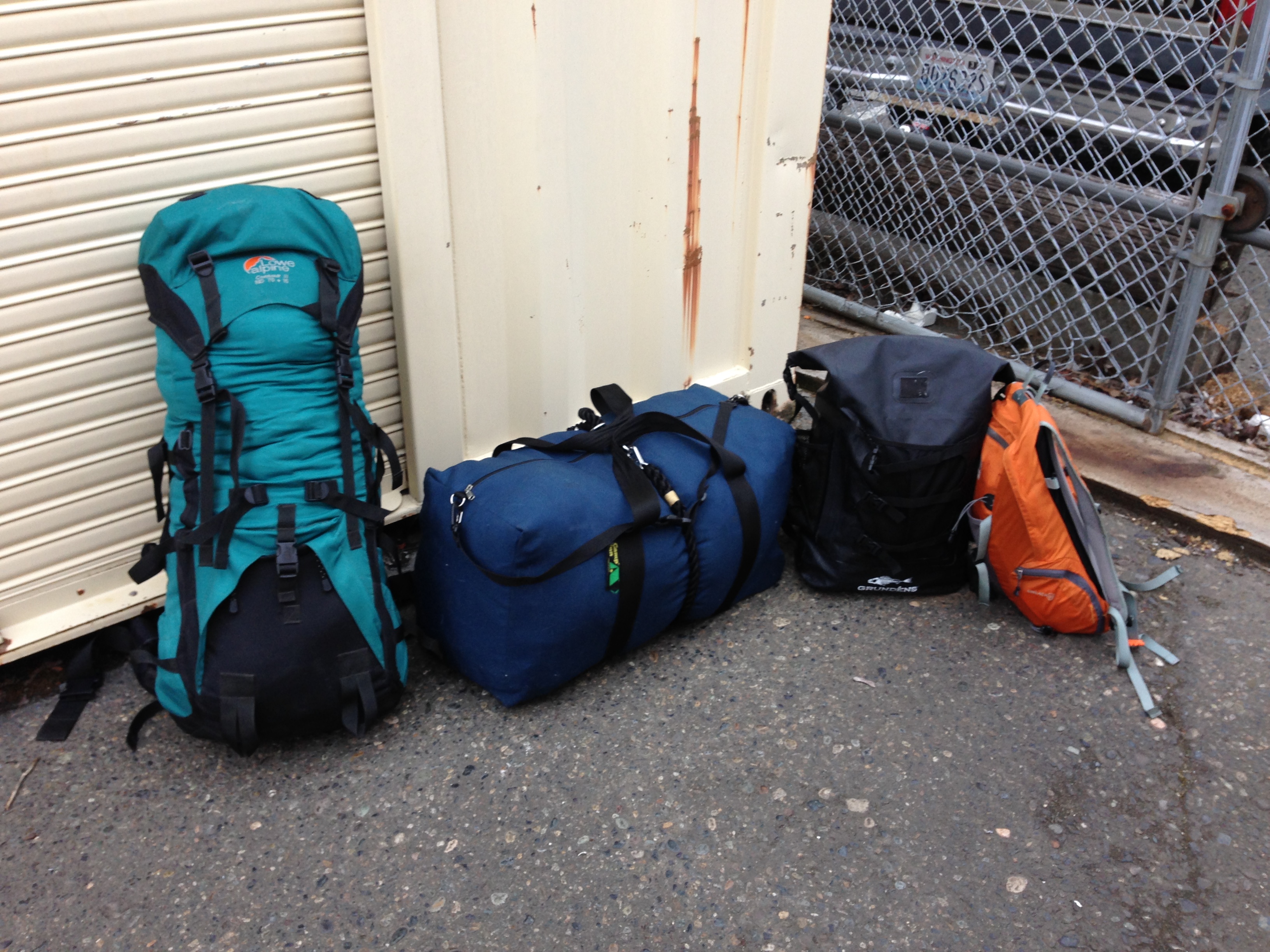
The bags.

Mount Rainier’s Cone Peeking Through the Clouds.


 sailingwithjosh
 Sailing With Josh