The Resourceful Sailor Talks Whisker Poles and Sail Clews
The following Resourceful Sailor piece was meant to compliment another, previously published by ‘Lectronic Latitude on April 19, 2024, called The Resourceful Sailor Talks Whisker Poles — the Good and the Better.
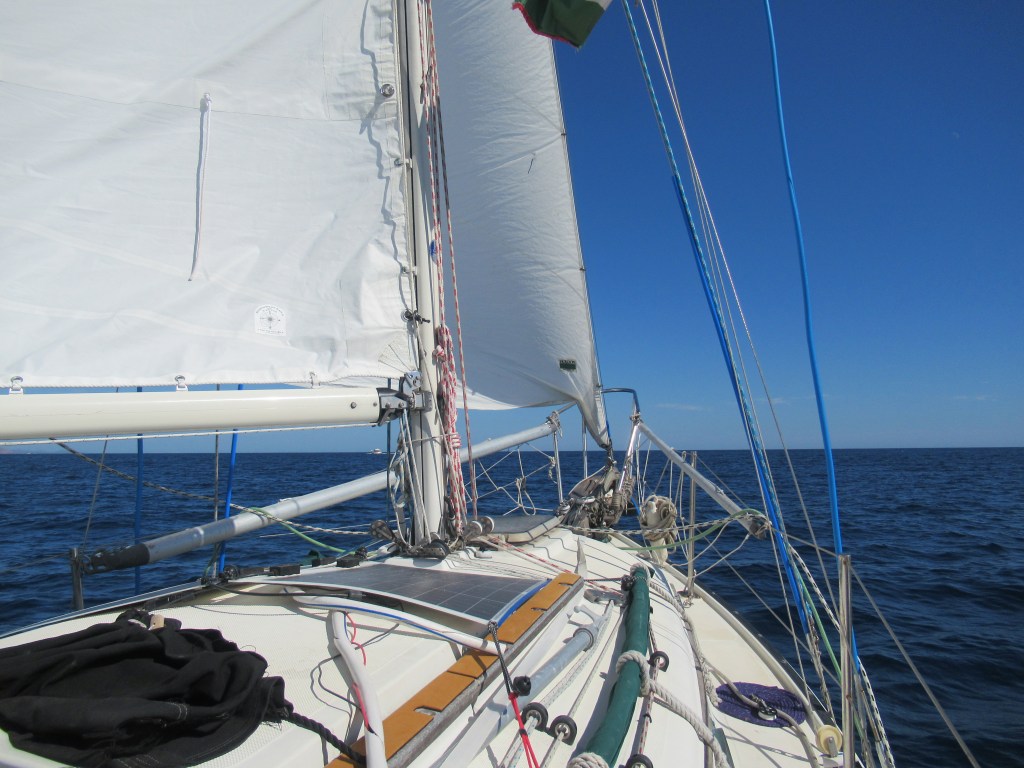
A question often arises about the proper way to use a whisker pole. Does it go on the sheet? Can you attach it to a soft shackle? Can you attach it directly to the clew? The Resourceful Sailor is not here to give that kind of sailing instruction. There are better people for that. The comment section below awaits you. He has used all three of those methods at one time or another. However, for single-handing on Sampaguita, a 1985 Pacific Seacraft Flicka 20, for various reasons of efficiency and control, he trended toward attaching the pole to the soft shackle or the clew. When it was the clew, it required some chafe protection.

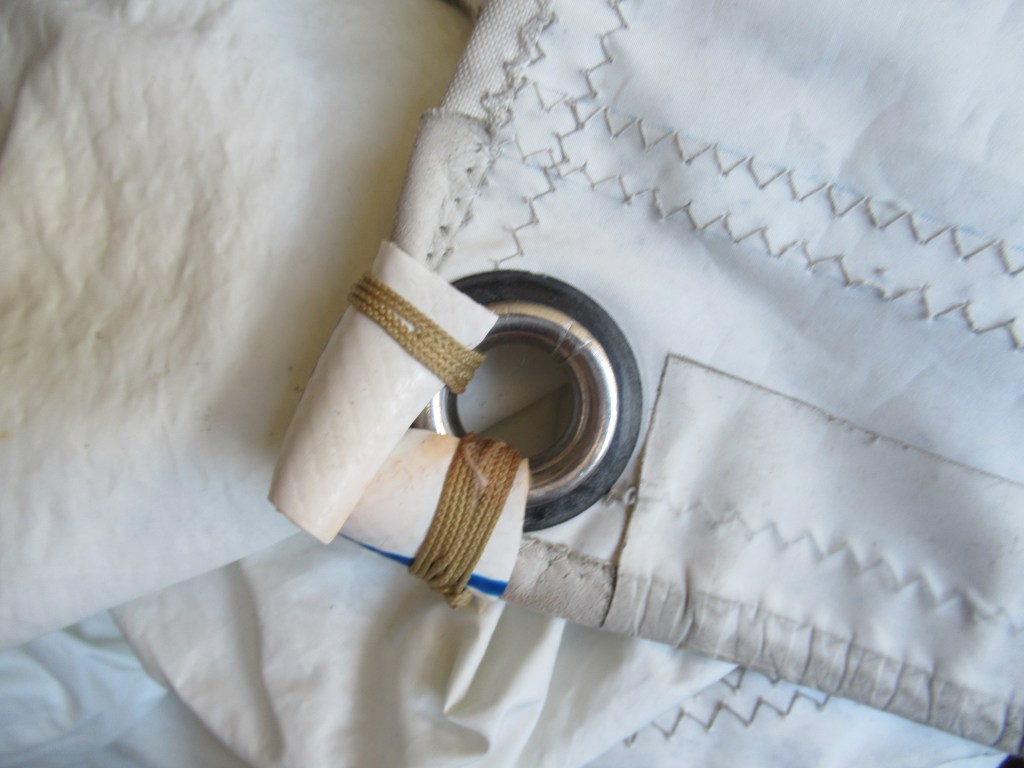
The 100% jib and the 140% drifter had end rings at the clew. These were larger than a traditional clew ring and easier to hook the pole to and from. I added chafe protection to the inside edge where it met the sail. In true RS fashion, I wedged a small piece of blown-out water hose cut lengthwise in and stitched up the top corners with waxed twine, securing it. It took less than ten minutes for each sail. The stitches were non-destructive, meaning they didn’t go through the sail, and this has proven to be very effective and durable, though not elegant. Luckily, Sampaguita and I are not that type.
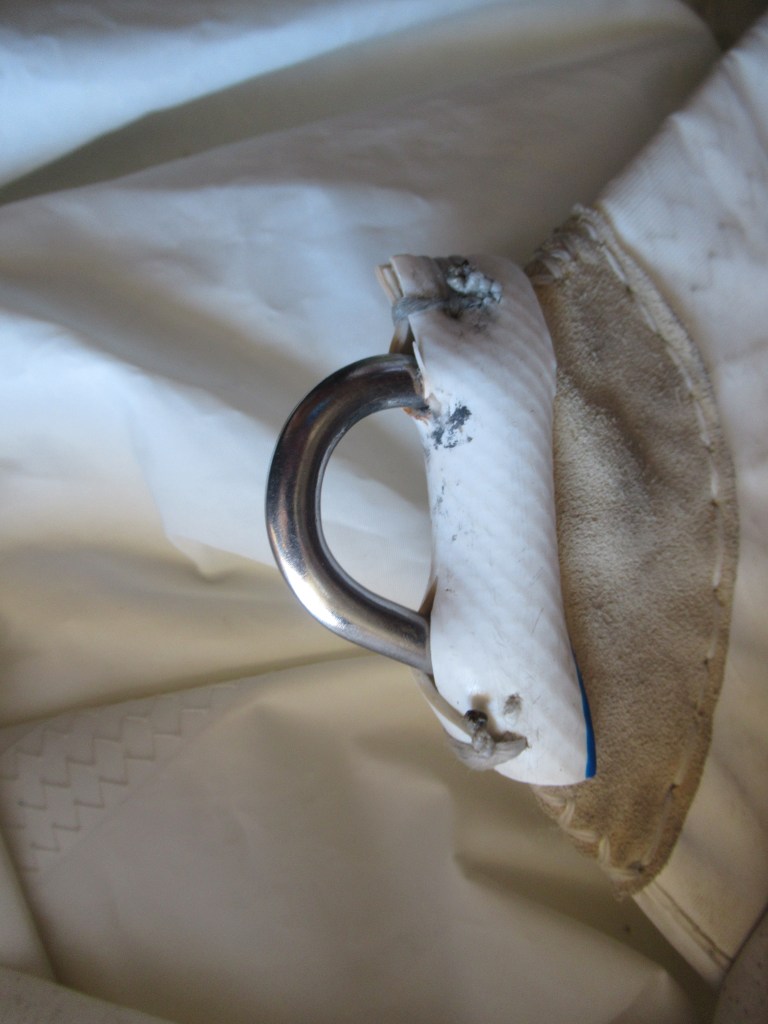
The genoa had a traditional ring at the clew. The chafe was going to occur on the outside corner of the sail. While using essentially the same materials, the approach was slightly different because of the sharp curve, requiring extra snips in the hose to accommodate it. I used thicker twine for durability and seized it around the clew to hold the piece of hose in place. It was still non-destructive. This one took about fifteen minutes.
The 80% and the storm jib also had traditional rings at the clew. However, for these, I attached the pole to the soft shackle. These sails are small enough that the pole kept the sail extended and tight enough, even with play in the shackle. With the genoa and the drifter, the pole was a bit undersized, and by attaching it directly to the clews, I maximized the extension of the pole. Add this to the list of small boat compromises.
As an aside, I added a snip of hose to the mast ring that the pole’s inward jaw clips on. I could hear it squeaking when I was down below. The ring is stainless steel, while the jaw is aluminum. So not only did it stop the squeak, but it protected the softer aluminum of the jaw.

The Resourceful Sailor advises never to throw away that old water hose. Not only does it work for sail clews, but it also works for chafe guards on dock lines going through chocks, anchor rode that wants to rub on bobstays, provides UV protection on wires at the base of the mast, for solar panel cables, and propane hose. With a close look, you’d see Sampaguita sport it from bow to stern. It was a function over fashion approach, free, readily available, and provided a second-use purpose for what would otherwise be garbage. If aesthetics matter, this solution won’t suit you. But it’s nice to have some old emergency water hose in the cockpit locker when things get chafed. You’ll be surprised how far you can go with a little resourcefulness. Remember, keep your solutions safe and prudent, and have a blast.
Discover more from Sailing With Josh
Subscribe to get the latest posts sent to your email.


 sailingwithjosh
 Sailing With Josh
Thanks Josh,guess I better go check for those chafe areas that I might have neglected.
Jim
LikeLike
Thanks for stopping by Jim. Sometimes maybe a combination chafe/UV protection. Or with the flag halyard pulley, the block was banging on the deck, which was annoying, Though a banging block wears itself down and the thing it bangs on too. Especially on the ocean where the movement is so great and goes on 24/7 for weeks at a time. I had some halyards showing signs of wear at the points I ran them internally through the mast within a couple weeks of being offshore. They were that way for two years in the Salish Sea with no signs of wear. It’s a whole different game out there. Until you’ve done ocean passages, you only THINK you’ve learned what it will be like.
LikeLike