Bahia Santa Maria Para Sampaguita

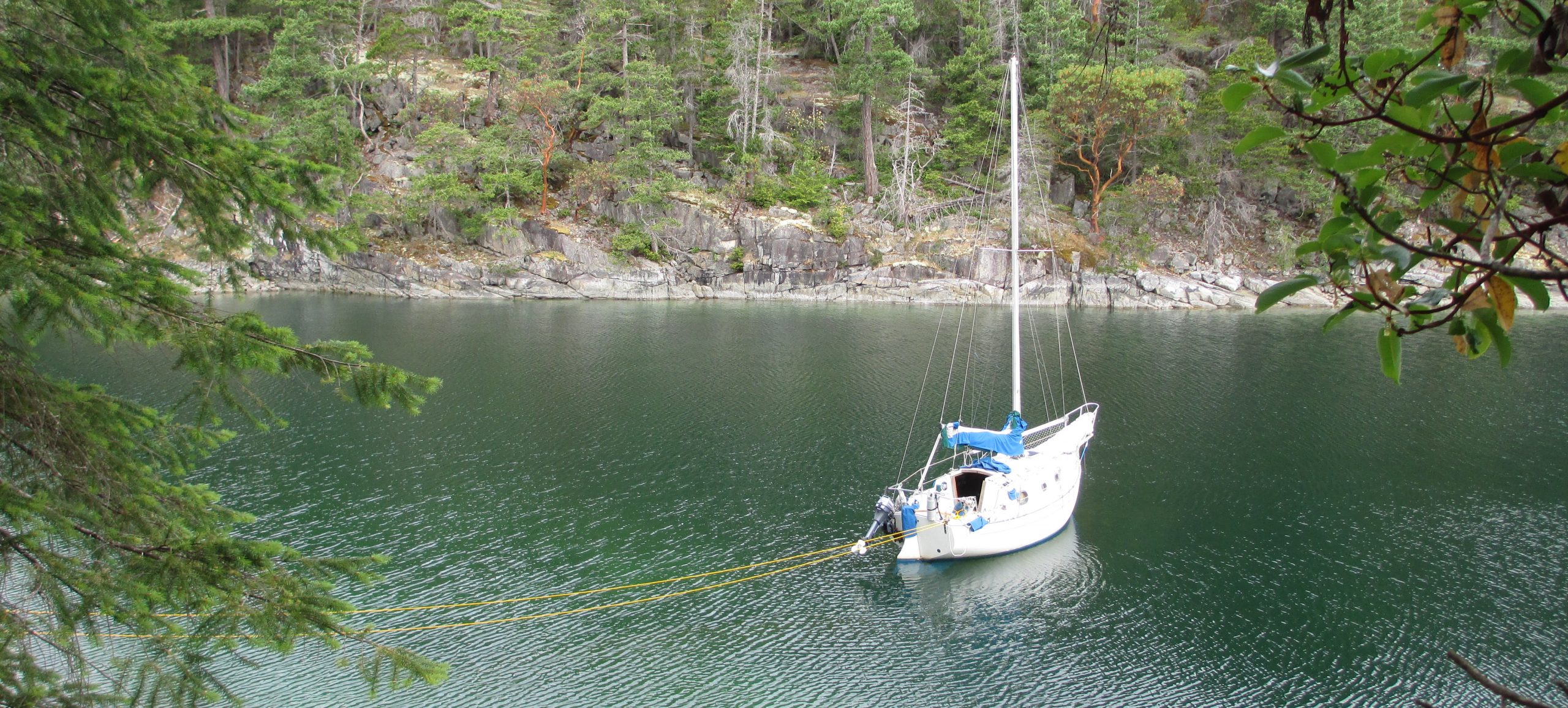
There are a lot of Alphas there. Or Adams if that is your background. After spending the last night at anchor in Bahia San Juanico with the smell of a beach fire coming from directly upwind, I awoke about 0400 with the boat bouncing. The southern wind had begun somewhere to the south and there were waves rolling in from that direction. Not big, but close enough and short enough to bounce the boat. No worries, I was heading out anyway. I had morning coffee, stowed the kayak, raised the mainsail, and pulled up the anchor. I had chosen Tuesday and Wednesday to be my travel days based on the forecast. Sunday was too soon, Monday was very light, and Thursday looked like it was piping up again. With Monday being light, I reasoned any weekend seas would get a chance to settle down. Tuesday was also looking light, but Sampaguita will sail in light airs, especially with a settled sea. Wednesday would pick up a bit more, ramping up on Thursday. It was about 100 miles, so I planned on two days with two overnights. I wouldn’t sail fast, but my overnights should be pleasant. Meeting that southerly which was presenting me with the bouncy morning, I close hauled out of the bay under full main and drifter, for about fifteen miles offshore. The wind slowly clocked around to the northwest, giving a beam, then broad reach through the afternoon and evening. That continued through the night with about 5-10 knots of wind. This worked out great. I covered about half my distance. About 0400 it faded and I had about 5 hours of being becalmed in the cooking sun. I even dropped the main all together to beat it up less. (But to roll more.) I watched a morning feeding frenzy around the boat. Well, I guess I didn’t see the feeding. What I saw was the smaller bait fish surfacing in an effort to escape whatever was doing the feeding. Were the predator tuna? Marlin? Sharks? I later learned it to be Yellowtail (Maybe Dorado? I don’t know my species very well.) In the lush waters of Baja, bait fish surfacing is a good sign there are predators worthy of eating driving them up. If you see a mass of pelicans dive-bombing, this too is probably a sign of that same activity occurring. Get out your speargun or fishing rods and head on over. I learned this from Grant of Mundial. He got two Yellowtails with one shot. I know this because he and Noel invited me over for fish tacos one evening. Deeee-licious. Tecate and tacos.

The northwest wind finally filled in but was fairly light. Still, with no sea, Sampaguita will cruise along at 3-4 knots. As the evening took hold it increased a bit. I traded out the drifter for the 100% jib, making my direction with an alternating orejas de burro and a starboard broad reach. By dark I reefed the main down to the third reef and dropped the headsail. This was not because the wind was too strong, but I wanted to slow the boat down. If this wind held, I would arrive at Bahia Santa Maria in the middle of the night, which I didn’t want. About 2230, I hove-to, deciding to get some sleep with a slow one knot southerly drift. At first, I did this under three reefs, but after an hour or so, I realized I wasn’t doing it right. With so little mainsail, the boat wasn’t weathercocking and I was really just lying ahull. This was not riding the waves in the most comfortable manner. So, I shook out a reef and relieved the over-pinching I was also doing and this made for a much more comfortable ride as Sampaguita turned more into the sea and rode up and over the waves. It was fortuitous that I had to do this, because I also noticed the windvane, (I rotate its servo pendulum rudder out of the water and tie it off when hove-to) had an important screw that was loosening in the jostling. This is the main screw that holds it to the mount. Failure at this screw would have been catastrophic for the vane. At 0430 I awoke for the final time to the boat lying ahull again, which is to say the wind had weakened. I decided with sun-up a couple hours away, I would begin my approach. I got the boat headed in the right direction, did my bucket and chuck-it routine, made coffee, and watched the sunrise. After sunrise, I pulled up the jib, poled it out orejas de burro style, and made myself a breakfast of pancakes, with cinnamon and banana, and of course, butter and proper maple syrup. With that Thursday increasing NW wind, I made my final approach on a port broad reach, keeping dry and doing five knots. Heaving-to sooner than later was a good choice. Approaching land at night only to have to heave-to anyway doesn’t feel good. In theory there was some buoy off the entrance, according to Navionics, (I think weather, not navigation. This is Mexico, neither hardly exist.) which is to say there may be a buoy there, maybe not. If there is, it may be on mark, or maybe not. It was supposed to be flashing yellow, but maybe not. At night, whether asleep or not, if it exists, is off mark, and not flashing, it would be like a can-opener if Sampaguita struck it. Once around Punta Hughes and into Bahia Santa Maria we turned into the wind to make the anchorage. This consisted of two long tacks close hauled with the 100% jib and two reefs in the main, doing five knots and about 18 degrees of heel. The water was much flatter than outside, but the wind was still smart. These two long tacks were followed by two short ones as we entered the anchorage, sailed between two other boats (there were four boats already here) and headed up behind Mundial in hopes of being close enough to them to get their Starlink signal. The last tack involved throwing in the third reef for a slower more controlled approach, and I like to put the mainsail away with three reefs, because if I have to leave in a hurry, it’s probably because the wind is blowing. I also got the anchor ready for a quick drop. Get the lines in order, the anchor gloves on, head up into the wind, spring the main sheet, release the jib halyard, scoot up to the bow, haul down the jib, pull the last pin holding the anchor, and feed out the chain and rode from the locker. Almost textbook, except the main didn’t completely de-power the way I needed, so the boat made some way while the anchor went down. I find this is the glitch most likely to occur. Once the anchor bites, it pulls the bow into the wind and this does the final trick of luffing the main. With less wind, it is easy to take the moment to luff the main, but in 15 knots of wind, things need to happen much faster. All’s cool that ends cool.

More on San Juanico…..
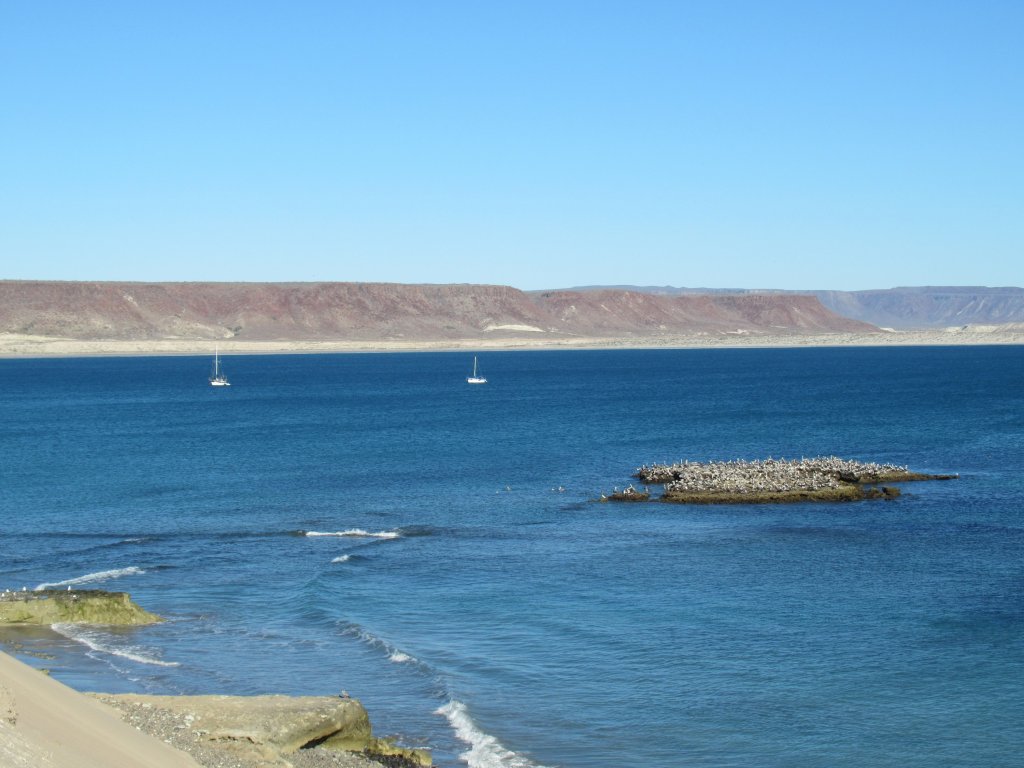
The charts say Bahia San Juanito, but the town goes by San Juanico. So, it’s a little vague to me. I’ve switched to the local San Juanico name because that’s the way I am. The landscape is quite beautiful. It’s typical Baja puntas y la playas and cliffs and rolling dry desert. But there are high mesas to the East and Northeast which give that epic western movie feel. They also divert the desert winds away, unlike in Bahia Asuncion and Bahia Tortuga where a desert NE wind can blast its way through the anchorage. The anchorage is comfortable with lots of room and 20-foot depths in sand. The prevailing NW wind funnels through, but the fetch isn’t bad, so again, comfortable. In fact, directly to the NW there are old and trashed windmills, likely placed there for that funneling. There is only one that noisily spins anymore. Their lives are long past. The thing with windmills that America is about to relearn is they have moving parts. Moving parts wear out and need constant maintenance. Put them in a desert and marine environment and you add dirt, sand, salt, and water to the equation which increases the maintenance. And there is such a thing as too much wind for them. Don’t get me wrong, I am not against wind energy. (Duh, I’m a sailor.) I’m just saying wind energy is nothing new and there was a reason it was replaced by other means.
The town of San Juanico is similar to other small Baja towns I have visited, but with one big difference. There are a lot of white people here. This puts it low on my list of cool. I know, you’re saying, ”Josh, you are white.” (It’s true, I was born that way.) Here’s the thing. I didn’t come to Mexico to hang out with white Americans. Surfing is big here with the 7 puntas. People visit to surf and stay for a lifetime. That’s not my community so I don’t have that connection. They often live in far better casas (and often a different neighborhood) than the rural Mexicans. This creates two different communities, just like it does in the States. I’d been putting myself out there to meet the Mexican locals for a few days and it just wasn’t happening. In towns with few-to-no white people, I was a curiosity and the local Mexicans engaged with me. Here I am just another white guy and largely ignored. My Espanol is slowly broadening, but still not good enough to confidently and deeply engage, which is my limitation to own. I walked by this one humble building several times. The front door was always open with people coming and going, and there were always Mexicans sitting around together, as I could see through the folds in the makeshift, yellow-tarped patio. They were all ages. I so much wanted to be invited in but when I saw people outside, no one even said hola or buenas tardes. With white people also comes higher prices, because that’s how an economy works. I can’t say there is a white price and a brown price for things, but I can’t say there isn’t either. Since I am transient, getting to know where to buy things and where not to doesn’t quite get figured out. The real estate brokerage signs are also a first in this town. It is not like San Juanico isn’t remote. It very much is. But demand has obviously brought in the professionals with white people brokerage names (and photos) and higher prices to make it worth it. And they are everywhere. (For contrast, someone mentioned they bought a house in San Hipolito a few years back for $500.) This is not to say the local Mexicans aren’t benefitting from an influx of white money. Gosh, I sure hope they are.

I did meet Hector and Mike on Saturday. I was walking down the hill, lamenting to myself about how the San Juanico town experience was boring as I approached the beach bar. My interest in going to bars here is as nil as it had become in the US. There was a guy sitting in his truck filled with fronds and a surf board smoking a cigarette. I made eye contact and we exchanged holas. Eye contact continued, so I walked over and further engaged. Hector spoke Ingles so we switched over to that. About my age, he was a vibrant and dynamic personality very willing to communicate. He was on his second forty-ounce of Pacifico and quite loose. (Drinking while driving is still a thing in certain parts of the world due to lack of enforcement, sparse enough populations, and roads you can’t drive very fast on anyway.) A native of Sanora, Mexico, but obviously a world traveler, he was a lot of fun to talk to. He first came to San Juanico 30 years ago and talked of some of the differences between then and now. During our conversation, a sailor, but now local resident, named Mike arrived to go to the bar. A small town and a common affinity for cerveza, they new each other and he joined in the conversation. He pegged my boat as a Flicka from a quarter mile away, so that broke the ice too. Mike grew up in San Luis Obispo, CA, but was a full time Mexican resident with a boat on the hard in Guaymas.(?) We chatted for a while and then made our way to the bar where Hector had a third forty, Mike had his share, and I had lemonade. I sometimes know when not to get caught up in a party that might be too much for me. (Plus, the white economy is a bit harder on the budget.) (I’ve elaborated on an old cliche: “Live a little……work a lot.”) (On second thought, maybe it should be “Live a lot…..Work a little?”) I guess since America is so money-minded, if you aren’t spending it, you must not be living. Another difference between Mexican/Latino and American culture. They know how to enjoy themselves without involving much money. This is not just apparent to me now. I remember while living in NYC and SF, the parks were full of Latinos and their families’ enjoying picnics and gatherings during the weekends. These parties were family events and would last all day. Everyone brought coolers, there was cooking, and game playing. This was their social event that didn’t cost much more than a regular day of life. In contrast to white people where the norm was to meet at a bar or go to some pay event which actual led to a division of classes. Some people you just couldn’t afford to hang out with. In rural Mexico/Latino culture (unless they are trying to emulate white culture for some ridiculous reason), they seem to not care about money as much. It matters less if you are a fisherman, clean toilets, are a store clerk, or whatever. It’s just what you do for money and doesn’t define you or exclude you. Though I’ll repeat what I’ve said before. I am an expert on American culture, but still in study on Mexican culture. And I’m just a fool in a 20-foot boat anyway.
I also had a satisfying chat with a guy named Juan, who I think might be homeless. It is polite and friendly to say hola, buenas dias, tardes, or noches(depending on the time of the day) to people in general and definitely before you want to ask for something. It’s also a way to engage people and see if they are interested in conversing further. So I said, “hola, buenas tardes” to the guy on the street to be polite and he responded in kind. I continued walking, but he followed up, so I returned to him. I think he was hinting that I might give him the long sleeve shirt I was wearing (It is super-hot, but I wear it to keep the sun off my skin). This was centered around how it was mucho caliente para deciembre. Pero mucho frio a noche. I wasn’t sure how to tell him it was to keep the sun off my skin, and I wasn’t going to give him the shirt off my back. I think he realized this quickly and the conversation moved to el barco, Cabo San Lucas, and las chicas de el mundo. We talked for a couple minutes and it wasn’t weird and I think he appreciated that I didn’t ignore him. I was happy because I left feeling like I was getting a better grasp of the language. Win, win.
Boat Hack: Great water conservation tools are the spray bottle and those refillable plastic hand held condiment dispensers. Like at diners. I use the spray bottle for washing vegetables, damping and rinsing my toothbrush, and washing my hands, to name a few. Just a spritz is all you need. The condiment dispensers are used most for rinsing soap from dishes, but really anything where a spritz is not quite enough. I might just be ahead of my time as reservoirs are draining low. As an aside, I went and got my first five-gallon jug refill at the local purificado vendor in San Juanico. 20 pesos for 5 gallons. That’s about a dollar. I didn’t really need it yet, but since I had decanted the jug into one-gallon containers the day before, I figured I’d see what it was all about. It was a chore to carry the full jug back to the kayak and I wasn’t sure yet how well it would travel through the surf, but it made it through dry. And concerning fresh water at sea, “Better looking at it than looking for it.”
Soul Hack: In case you think I’m not critical of my own ridiculousness enough, I was laughing at myself recently regarding Starlink. The Emperor has made me cringe so much in the last few years, in preparing for this voyage, Starlink and the fact nearly all cruisers were using it was totally off my RADAR. I was blinded by my bias. The power consumption and the hardware/subscription costs still meant I would have almost definitely decided it was one of those must haves I wouldn’t have. (I thought my Google Fi phone would have better reception.) But it never even made that list. Duh. To add to this, Mundial left on Sunday, so I lost that Starlink access then. But I had seen on my phone’s wifi list an access signal simply called “Starlink” that had no lock on it. But the signal was so weak, I couldn’t get a usable connection. This was on the boat. When I landed the kayak, I also got it on the beach, but it was a little stronger, but still, not usable. But when I climbed the stairs to the street, it completely disappeared. So, I returned and walked up and down the beach to see if I could find a strong enough signal. I finally discovered there was literally about a ten-foot square spot on the beach where I could get a usable signal. In the cooking sun, I was able to download the Predictwind graphics and study them. Just don’t move. How’s that for ridiculous? I could have gone to the bar, but I was very averse to that. The only reason I would go and purchase anything would be simply to use the internet, not because I wanted to consume anything. I discovered later in the day, in my strolling past the telecommunication building I had walked by many times already, a plaque on the side of the building explaining they had complimentary wifi and how to connect to it. (In Espanol, of course.) So, I tried it and sure enough, it worked great. And I could sit in the shade! Two triumphs and I didn’t have to revert to buying something I didn’t want just to check the weather. A simple life. It took some time and investigation skills. It turns out I had both. How’s that for ridiculous? I guess I like it. All’s cool that ends cool.
Wildlife: I’ve officially decided I hate pelicans. Just another version of rats with wings.
Discover more from Sailing With Josh
Subscribe to get the latest posts sent to your email.


 sailingwithjosh
 Sailing With Josh